France's 2026 harvest estimate was revised up to 36.7 million hectolitres: what the November figures change for a visit
Agreste's estimate of 1 November 2026 puts France's harvest at 36.7 million hectolitres, 3% above 2025 and 10% below the 5-year average, up from about 34 million in September. Champagne is 38% under 2025. The figures by region, and what no source says about visits.
France's 2026 grape harvest is estimated at 36.7 million hectolitres, 3% above 2025 and 10% below the 2021-2025 average. Those are the figures of Agreste, the statistics service of the French agriculture ministry, in its estimate of 1 November 2026. Two months earlier the same service had put the crop at close to 34 million hectolitres, 6% below 2025. In Champagne the 1 November estimate is 38% below 2025, in Burgundy and Beaujolais 22% below. None of these figures says that a cellar door, a champagne house or a vineyard walk is open or closed. That gap is the subject of this article.
Figures as read on 19 November 2026 from Agreste. They are estimates and they change: check the official source before you travel. This is not legal or financial advice.
We earn a commission if you book a tour through this site. It does not change the price. How we work.
What does Agreste's November estimate say about the 2026 harvest?
Agreste's table gives 36,659 thousand hectolitres for all wines, against 35,449 for 2025 and 40,577 for the 2021-2025 average. The publication is titled as a revision, and the text says it comes mainly from better yields than expected in Languedoc-Roussillon and the Charentes, two basins that make about half of the national volume, and also in Champagne and the south-east. It adds that the figure uses the first harvest declarations. The estimate of 1 September, in Infos rapides Viticulture n° 107, was 33,864 thousand hectolitres.
| Region | 1 Sept 2026 | 1 Nov 2026 | 1 Nov: change on 2025 | 1 Nov: change on 2021-2025 average |
|---|---|---|---|---|
| Champagne | 1,344 | 1,587 | -38% | -36% |
| Burgundy and Beaujolais, combined | 1,430 | 1,481 | -22% | -30% |
| Alsace | 810 | 810 | -6% | -11% |
| Loire Valley | 1,890 | 1,973 | -7% | -14% |
| Jura | 70 | 67 | -28% | -13% |
| Charentes | 7,505 | 7,455 | -5% | -24% |
| Bordeaux | 3,524 | 3,496 | +10% | -11% |
| Languedoc-Roussillon | 9,579 | 11,068 | +25% | +6% |
| France, all vineyards | 33,864 | 36,659 | +3% | -10% |
Read the table by its bases. The reference figures were recalculated between the two publications: 2025 is 35,894 thousand hectolitres in September and 35,449 in November, and the five-year average moves from 40,666 to 40,577. Percentages from the two documents therefore do not subtract cleanly, and the percentage columns above are the November ones. Bordeaux is up 10% on 2025 and 11% under the average, because 2025 was very small. Languedoc-Roussillon, the largest basin in the table, went from +5% on 2025 in September to +25% in November. Agreste says its regional figures are drawn from departmental samples, and that the split between wine categories is only indicative until the harvest declarations are in.
Why was the estimate revised upwards?
Rain and water reserves, according to Agreste. It says the southern basins had very good soil water before the summer, late rain from the end of summer and some local irrigation, so yields held up in Languedoc-Roussillon, the south-west, the south-east and Corsica after weak harvests in 2025. In the northern half of the country, the same text says, drought and summer heat hurt yields. The result is a divide, not an average: Languedoc-Roussillon is 6% above its five-year average, Champagne 36% below.
Two more numbers from the November text. IGP wines, mostly from Languedoc-Roussillon, are estimated 18% up on 2025, while AOP wines are 4% down. And vineyard area in production fell 5.6% between 2024 and 2025, then 1.9%, under the national plan to reduce the vineyard. A smaller vineyard is part of the reason the crop is 10% under the average.
How far below normal are Burgundy and Champagne?
Hail, drought and heatwaves in one basin
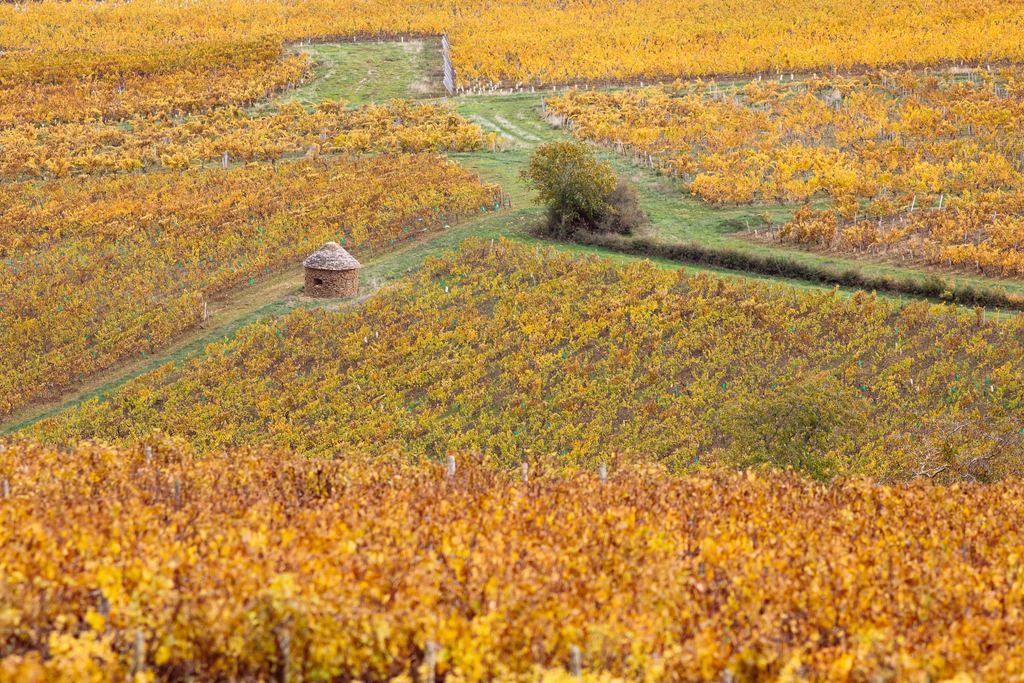
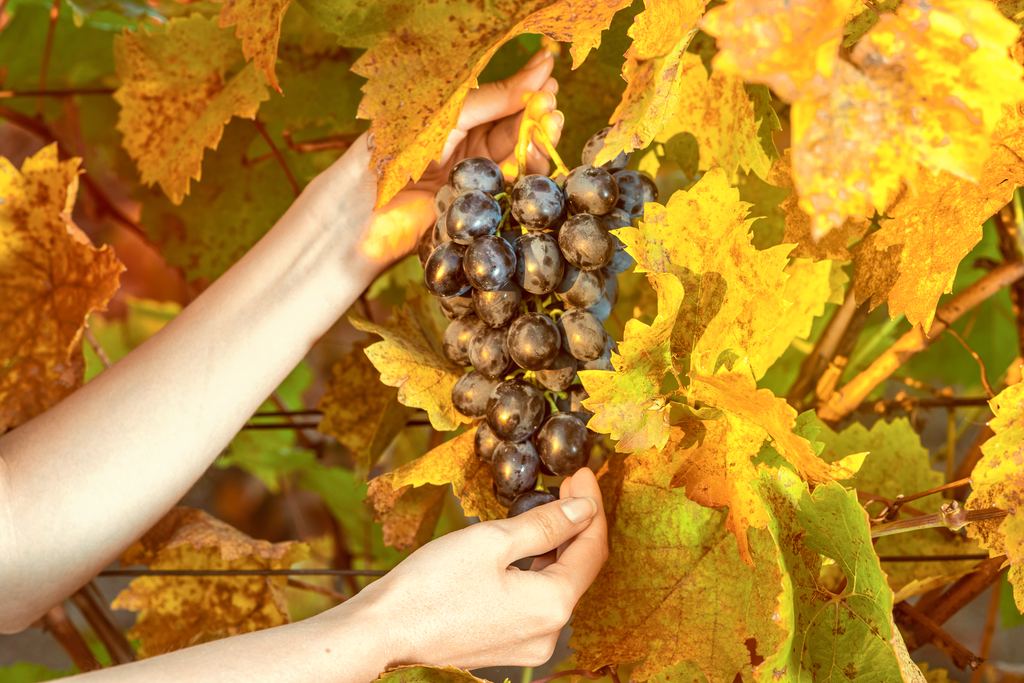
Autumn vines near Buxy in the Côte Chalonnaise, Burgundy, with a small stone hut among the rows.
Agreste gives Burgundy and Beaujolais as one basin: 22% below 2025 and 30% below the five-year average on 1 November, against 33% and 33% on 1 September. It says frost, hail, drought and heatwaves cut a harvest that had looked promising, that Burgundy's Pinot noir lost more than 50%, and that Beaujolais had historically low yields. The 22% is a basin figure, not a Beaujolais figure and not a Pinot noir figure. Quoting it for one village or one grape would be wrong.
Champagne rose from 1,344 to 1,587 thousand hectolitres between the two publications and stays 38% under 2025 and 36% under the average. Agreste lists frost in the Aisne, hail, drought since March and summer heatwaves, and says the figure rests on the first harvest declarations. The Jura is 28% below 2025 (36% in September), the Loire Valley 7% below, with harvests Agreste calls the earliest observed since 1893, and Alsace 6% below.
When did the 2026 harvest end?
Early, and all of it before the November estimate. Agreste says Champagne finished at the very beginning of September, with higher alcohol levels than in previous years. Burgundy and Beaujolais finished in mid-September, the Charentes in early September and the Loire Valley in September. Alsace began on 18 August and finished in early October. The September publication had given Champagne a start in mid-August, Beaujolais around 13 August and the Loire Valley around 10 August.
For a visitor the consequence is practical. Picking in these regions is over for 2026, and no document we read gives dates for 2027.
What does a revised crop estimate change for a visit?
Less than the headline suggests, and we cannot say how much. A harvest estimate is about volumes of grapes and wine. A visit is a booking with a house, a family estate or a tour operator, and neither of the two Agreste documents links one to the other. Neither says anything about opening hours, tasting rooms, visit prices or which vintages are poured.
One point follows from the dates. A visitor between December and spring will see vines without grapes, and the harvest estimate does not move that calendar. For the logic of when each region is worth a trip, our guide to harvest season by hemisphere and the one on rain, heat and frost do the longer version, and the page for Champagne tours has the formats.
We cannot tell you the vintage will be good, or that it will be bad. Neither document we read says.
What do the sources not say?
Quite a lot, and it is worth listing. Neither Agreste document forecasts prices, the quality of the vintage or which vintages a given tasting pours. The September text calls the Champagne maturity "exceptionnelle" and the November text mentions higher alcohol levels: both describe grapes at harvest and are not a verdict on finished wine. Agreste says last season's results are established from harvest declarations to the customs service, and that the split of 2026 wine between categories is indicative until those declarations arrive. It gives no figure for Italy or Spain, and neither do we.
So "go before the wines run out" has no support in what we read. Neither has "skip Champagne in 2027". Both are guesses presented as news. A figure copied from the September publication into a booking guide would be out of date by November, which is what an estimate does. The September text said:
Il s'agirait d'une des plus faibles récoltes des 30 dernières années. (Agreste, Infos rapides Viticulture n° 107, 1 September estimate, read 19 November 2026)
Our translation: it would be one of the weakest harvests of the last 30 years. That was in the conditional, for a figure of close to 34 million hectolitres. We did not find the sentence in the November text, which compares 36.7 million with 2025 and with the five-year average.
How do you check before you book a visit?
Ask the people who run the visit. Three questions are enough. Is the visit offered on the date you want? Which vintages will be poured, and are any sold out? Does the price list differ from the one on the booking page? A house or an estate can answer all three in one email, and the answers are worth more than any regional percentage.
If you want the numbers yourself, each Agreste publication is four pages and the regional table is on page 3. Look for the line of your region, then read the two percentage columns together: the first is against 2025, the second against the 2021-2025 average. Page 4 lists the departments behind each region. Both publications are free to read. If your plan is a base town and day trips, our guide to Reims or Épernay sets out where to sleep, and the when to visit wine regions pillar covers the other countries.
Two regions behind the biggest drops
Questions about the 2026 French harvest
How big is France's 2026 wine harvest?
36.7 million hectolitres according to Agreste's estimate of 1 November 2026: 3% above 2025 and 10% below the 2021-2025 average. The estimate of 1 September was close to 34 million.
Is it worth visiting Champagne after a small harvest?
We found no source that links the size of the harvest to visiting. Agreste measures volumes, and its 1 November estimate puts Champagne 38% below 2025. Visits are booked with each house or estate, so ask them about dates and what is poured.
When did the 2026 harvest end in France?
Between early September and early October, according to Agreste: Champagne at the very beginning of September, Burgundy and Beaujolais in mid-September, Alsace in early October.
Will 2026 wines be more expensive?
None of the sources we read says so, and we do not forecast prices. Agreste publishes volumes, not prices.
Is 2026 one of the smallest French harvests in 30 years?
Agreste's September text said it would be, in the conditional, at close to 34 million hectolitres. The November estimate is 36.7 million, 3% above 2025, and we did not find that sentence in the November text.
Wine Tours Editorial earns a commission when you book through links on this page. It does not change the price you pay. See our editorial policy.
Champagne tours from Reims and Épernay
Day tours that start in the two towns. Check dates and what is included on each listing before you count on one.

4x4 Defender Vineyard Safari near Reims with Panoramic Champagne Tasting, 2 to 8 Guests
A Defender 4x4 takes two to eight guests along vineyard trails to the highest panoramic points, where champagne is tasted after a stroll through Hautvillers.
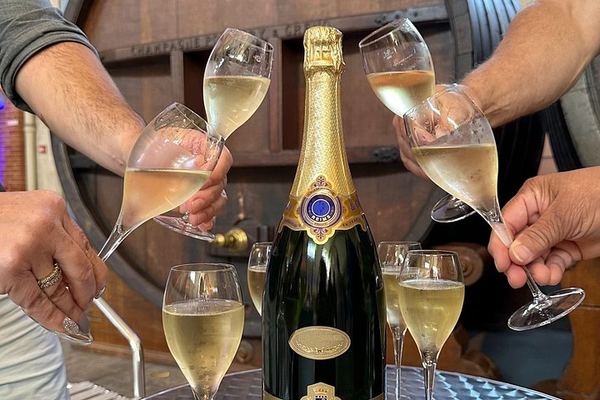
Champagne Day Trip from Reims: City Sightseeing, Three Family Growers, Nine Tastings
Sightseeing in Reims comes first, then three family wineries in the countryside with nine tastings. Dom Pérignon's tomb and Épernay fill the gaps between.
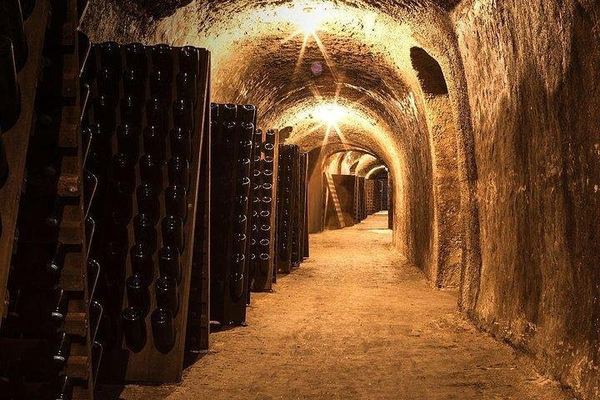
Champagne Lamiable Traditional Cellar Tour and Three Grand Cru Tastings, Tours-sur-Marne
A hand-dug chalk cellar at Champagne Lamiable, three Grand Cru wines and a guide who adapts the visit to questions. Guests arrive by their own transport.
Ratings collected by Viator and Tripadvisor
Where these figures come from
Everything above was read on 19 November 2026 in two documents, both primary. Figures and the quoted sentence were checked against the text of the PDF files themselves, not against a summary.
- Agreste, Infos rapides Viticulture n° 143, November 2026: estimate at 1 November 2026, regional table, causes, harvest end dates
- Agreste, Infos rapides Viticulture n° 107, September 2026: estimate at 1 September 2026, start dates, the 30-year sentence
One thing we left out. The Comité Champagne page for its 22 July 2026 press release on the marketable yield did not open at the address we had, so none of its figures is in this article.
Data verified on . Agreste Infos rapides n° 107 (1 Sept 2026) and n° 143 (1 Nov 2026), both read on 19 Nov 2026. Next check: 2026-12-17. Editorial Policy
Wine Tours Editorial earns a commission when you book through links on this page. It does not change the price you pay. See our editorial policy.
Planning Champagne around the harvest calendar
How a day from Reims or Épernay is put together, where each one starts and what it covers.