

Choose your wine region by the city you sleep in the night before. Wine tours are sold from cities, and the city decides how much of the day goes to tasting and how much to the road. The Chianti Classico zone lies between Florence and Siena, according to its consortium, so the city is already inside the day. The Okanagan Valley is about 4.5 hours by car from Vancouver, says Tourism Kelowna, so there the city is most of the day.
Below are 29 wine destinations in 13 countries, grouped by country. Each row gives the city to start from, the wine region, our page for it, a note on when the grapes come in, and one line on why that city. Where an official source gave a distance or a journey time, we quote it and name the source. Where we found none, the row gives the usual start city and nothing else. The planning guide picks up once you have chosen.
How do you choose your wine region from the city you start in?
Work in four steps. Find your city in the first column of the tables. Read the last column to see whether the region is a day from that city or a trip of its own. Check the harvest note against your dates. Then open the destination page, which lists the tours. Questions of format, such as group against private, wait until the region is settled: how to choose a wine tour covers them.
Our rule: if the official journey is more than about an hour each way, plan a night near the vineyards or pick a region nearer the same city. If you will taste, do not drive. Zero is the safest number, and the drink-driving page has the limits we could verify.
Which wine regions are picking grapes on your dates?
Harvest changes what the vineyards look like and how busy the cellars are, so check it before you fix a city. In the rows we could verify, the southern hemisphere comes first in the calendar year. The Cape, the Hunter Valley and the Barossa begin between January and mid-February, Mendoza in late February, Chile and Marlborough in March. In the north, Provence starts in the second half of August, Prosecco grapes are ripe from the end of that month, the Saint-Emilion tourist office points visitors to the harvest from mid-September and the Chianti Classico grapes ripen from late September. A trip in late February points south. A trip in mid-September points north.
Windows move. The Comité Champagne says picking has been starting earlier, and the Yarra Valley page calls its own dates an absolute rule of thumb. Read every note as a month, not a date. Eight rows carry no window: Tuscany beyond the Chianti Classico zone, Campania, the Rhone Valley, Rioja, Lisbon and Arrabida, Kakheti, Niagara-on-the-Lake and Waiheke Island. We could not confirm one from an official source, so the cell says so. Penedes and Priorat has only the dates of a harvest festival, which is not a window either. The harvest page and the weather page go further.
Which Italian wine region starts from Florence, Turin, Venice or Naples?
Two Tuscan rows share their start cities, Florence and Siena. The Chianti Classico zone lies between them, while the Brunello consortium puts Montalcino forty kilometers south of Siena. Veneto is two days in one row: the Prosecco hills and Valpolicella have different start cities.
| Start city | Wine region | Our page | Harvest note | Why start there |
|---|---|---|---|---|
| Florence or Siena | Chianti Classico and the wider Chianti zone | Chianti | Grapes ripen from late September to mid-October (Chianti Classico consortium) | The Classico zone lies between the two cities, so either one is a base. Florence is the usual start for tours. |
| Florence or Siena | Montalcino, Montepulciano and San Gimignano | Tuscany | No window confirmed from an official source | Montalcino is forty kilometers south of Siena (Brunello consortium). Each of the three is a trip of its own. |
| Turin or Milan | Langhe and Barolo | Langhe and Barolo | Harvest experiences run from late summer to early October (Langhe Monferrato Roero tourist board) | Turin and Milan are where tours usually start. |
| Venice or Verona | Prosecco hills and Valpolicella | Veneto | Prosecco DOC grapes are ripe from the end of August to the beginning of September (Consorzio Prosecco DOC) | The Prosecco Route between Conegliano and Valdobbiadene is 50 kilometers long (Italian tourist board). Verona is the usual start for Valpolicella. |
| Naples or Sorrento | Vesuvius and the Campania vineyards | Campania | No window confirmed from an official source | Naples and Sorrento are where tours usually start. |
| Catania or Taormina | Mount Etna | Sicily | Carricante is picked from late September to early October, Nerello Mascalese ripens in the second ten days of October (Consorzio Etna DOC) | The consortium places Etna on the east coast of Sicily, north of Catania. |
Sources for the Italy rows:
Italian wine regions by start city
Chianti
From Florence or Siena: Chianti Classico and the wider zone.
Tuscany
Montalcino, Montepulciano and San Gimignano, each a trip of its own.
Langhe and Barolo
From Turin or Milan, among the Barolo and Barbaresco hills.
Veneto
The Prosecco hills and Valpolicella, from Venice, Treviso or Verona.
Campania
From Naples or Sorrento, around Vesuvius.
Sicily
Mount Etna, north of Catania.
Which French wine region starts from Paris, Bordeaux, Beaune or Avignon?
In France the start city is usually a station. Reims is 45 minutes from Paris by TGV, the Reims tourist office says, and the Beaune tourist office gives 2h15 from Paris. The Rhone row is the odd one out: even the train from Lyon to Avignon takes longer than the whole Champagne trip from Paris to Reims.
| Start city | Wine region | Our page | Harvest note | Why start there |
|---|---|---|---|---|
| Paris, Reims or Epernay | Champagne | Champagne | Usually September, and in recent years often from mid-August (Comité Champagne) | Reims is 45 minutes from Paris by TGV (Reims tourist office). One day from Paris reaches one town, not both. |
| Bordeaux | Saint-Emilion and the Bordeaux vineyards | Bordeaux | Mid-September to the end of October (Saint-Emilion tourist office) | Saint-Emilion is about 35 minutes from Bordeaux by car, depending on traffic, the tourist office says. |
| Beaune or Dijon | The Cote d'Or | Burgundy | September or October (Burgundy wine board, BIVB) | Beaune and Dijon are both named in UNESCO's Climats listing. The Beaune tourist office gives 2h15 from Paris by train. |
| Nice, Aix-en-Provence or Marseille | Provence | Provence | Second half of August on the coast, through October at the latest (CIVP) | These three cities are where tours usually start. |
| Avignon or Lyon | The Rhone Valley and Chateauneuf-du-Pape | Rhone Valley | No window confirmed from an official source | Avignon and Lyon are the usual starts. Lyon to Avignon alone is 1h50 by train (Vaucluse tourism board). |
Sources for the France rows:
Which wine region starts from Porto, Lisbon, Barcelona or San Sebastian?
Barcelona and Lisbon sit close to their wine regions. Porto and San Sebastian are the starts for regions that take longer to reach, and the official sources are thinner there.
| Start city | Wine region | Our page | Harvest note | Why start there |
|---|---|---|---|---|
| Porto | The Douro Valley | Douro Valley | August to October, depending on the year and the ripening (IVDP, the Port and Douro wine institute) | Porto is the usual start city for the valley. |
| Lisbon | Arrabida and Setubal | Lisbon and Arrabida | No window confirmed from an official source | The Setubal municipality is 50 kilometers from Lisbon, according to its tourism site. |
| Barcelona | Penedes and Priorat | Penedes and Priorat | Harvest festival events run through September in Penedes; no harvest window confirmed (Penedes tourism consortium) | The Penedes tourism consortium says the region is about an hour from Barcelona. Barcelona is also the usual start for Priorat. |
| San Sebastian, Bilbao or Logrono | Rioja | Rioja | No window confirmed from an official source | Laguardia, in Rioja Alavesa, is about an hour and a half by bus from San Sebastian (Basque Government tourism). |

Rioja is the row where the start city matters most. The Basque Government's tourism page says the Alava bus reaches Laguardia in just under an hour from Vitoria-Gasteiz, and that from San Sebastian you arrive by bus in an hour and a half. It gives no time from Bilbao. A San Sebastian start therefore works for Rioja Alavesa, which is only one part of the region.
For the Douro we have a harvest window and a start city and no official distance. Read the door-to-door hours on any listing before you book: how to read a tour listing shows which lines to question.

Sources for the Portugal and Spain rows:
Where do you start for wine in Greece, Georgia, the United States and Canada?
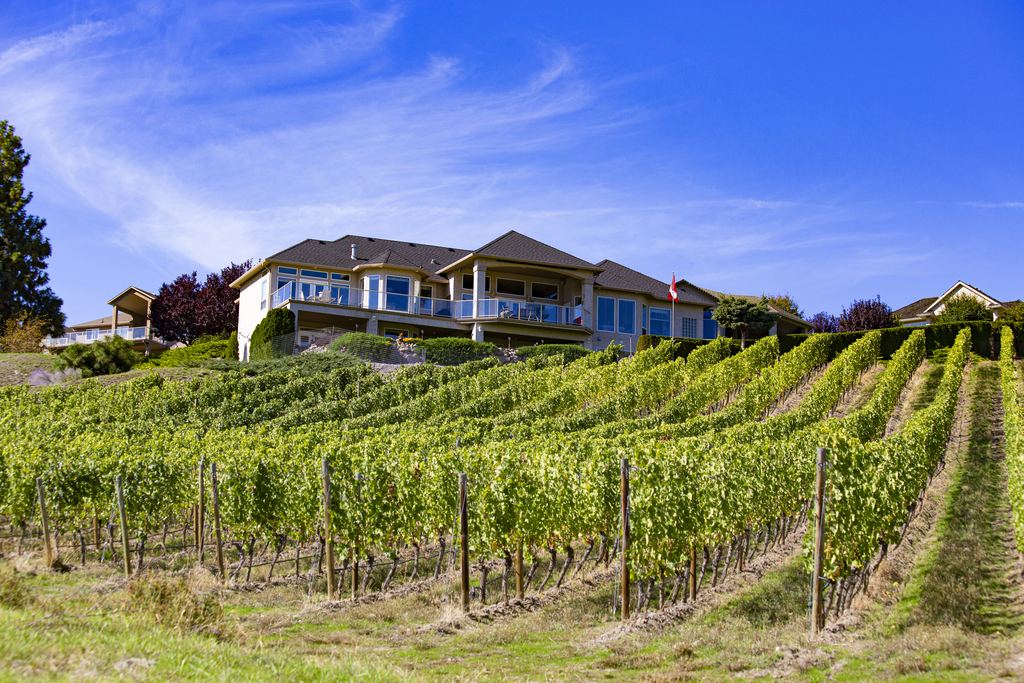
The Okanagan row is the awkward one. Tourism Kelowna gives about 4.5 hours by car from Vancouver, so a Vancouver start is a trip, not a day. Start from Kelowna, or treat the valley as a destination in its own right. Santorini is the opposite case: you start on the island, and the question moves from distance to how you get between cellars. In Napa the start is San Francisco and the choice is which valley. Napa or Sonoma makes it.
| Start city | Wine region | Our page | Harvest note | Why start there |
|---|---|---|---|---|
| On the island | Santorini | Santorini | Usually from the beginning or the middle of August (Wines of Greece) | You start on the island, so the question is how you move between cellars. |
| Tbilisi | Kakheti | Kakheti | No window confirmed from an official source | The Georgian National Tourism Administration lists 1:50 hours by road from Tbilisi on its Kakheti page. |
| San Francisco | Napa and Sonoma | Napa and Sonoma | August into October; Napa reds can run to early November (Visit Napa Valley, Sonoma County Tourism) | Downtown Napa is 50 miles from San Francisco, one to two hours by road (Visit Napa Valley). Pick one valley a day. |
| Toronto or Niagara Falls | Niagara-on-the-Lake | Niagara-on-the-Lake | No window confirmed from an official source | Wine Country Ontario puts the town about an hour and a half from the Greater Toronto Area. |
| Kelowna or Vancouver | The Okanagan Valley | Okanagan Valley | Fall (Wines of British Columbia) | Vancouver to Kelowna is about 4.5 hours by car (Tourism Kelowna). For a day trip, start from Kelowna. |

Sources for these rows:
- Wines of Greece: Assyrtiko of Santorini
- Georgian National Tourism Administration: Kakheti
- Visit Napa Valley: getting to Napa Valley (read on an archived copy), fall in Napa Valley (read on an archived copy) and Sonoma County Tourism: lifecycle of wine grapes (read on an archived copy)
- Wine Country Ontario: Niagara-on-the-Lake (archived copy)
- Tourism Kelowna: getting here by car (archived copy)
- Wines of British Columbia: harvest
Where do you start for wine in Argentina, Chile and South Africa?
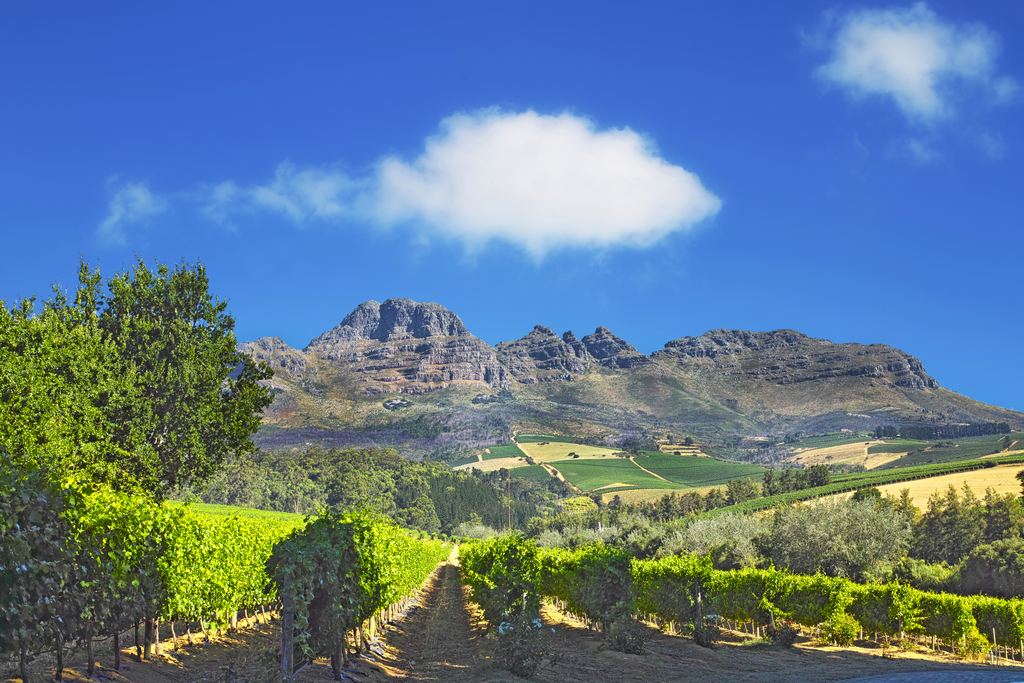
Mendoza and the Chilean valleys carry the clearest official distances in these tables. Uco is about 90 minutes from Mendoza city, so we would not mix an Uco day with a Lujan de Cuyo or Maipu day. Casablanca is 40 kilometers from Valparaiso and 80 from Santiago, so the start city changes the length of the day by about twenty minutes each way.
| Start city | Wine region | Our page | Harvest note | Why start there |
|---|---|---|---|---|
| Mendoza city | Lujan de Cuyo, Maipu and the Uco Valley | Mendoza | Late February to early April (Ente Mendoza Turismo) | The provincial tourism body puts Uco about 90 minutes and 100 km south of Mendoza city. |
| Santiago or Valparaiso | The Maipo and Casablanca valleys | Maipo and Casablanca Valleys | March to May (Chile Travel) | Casablanca is 80 km and 1 hour from Santiago, 40 km and 40 minutes from Valparaiso. Maipo starts about 60 km from Santiago (Chile Travel). |
| Cape Town | Stellenbosch and Franschhoek | Cape Winelands | January to April (South African Tourism) | Cape Town is the usual start for both towns. |
Sources for these rows:
Where do you start for wine in Australia and New Zealand?
The Hunter Valley shows what a start city does. Destination NSW gives 170 km from Sydney, around two hours by the most direct route, and about an hour from Newcastle. Same vineyards, two different days. Margaret River's three hours from Perth is the longest of the Australian figures here, and we would plan a night in the region. Waiheke is different again: a ferry crossing of 40 minutes from downtown Auckland.
| Start city | Wine region | Our page | Harvest note | Why start there |
|---|---|---|---|---|
| Sydney or Newcastle | The Hunter Valley | Hunter Valley | Late January to March (Hunter Valley Wine and Tourism Association) | Destination NSW puts the valley 170 km north of Sydney, around two hours by the most direct route, and 60 km and about an hour west of Newcastle. |
| Adelaide | The Barossa Valley | Barossa Valley | Mid-February to late April (Barossa Australia, archived page) | Barossa Australia describes the valley as just an hour from Adelaide. |
| Melbourne | The Yarra Valley | Yarra Valley | Mid-February to the end of April, as a rule of thumb (Visit Yarra Valley) | Wine Yarra Valley calls it an hour's drive from the heart of Melbourne. |
| Perth | Margaret River | Margaret River | Begins in February (Margaret River Wine Association) | The Wine Association calls it an easy three-hour drive from Perth. We would plan a night there. |
| Blenheim or Picton | Marlborough | Marlborough | Autumn, March to May (Destination Marlborough) | Blenheim and Picton are where tours usually start. |
| Auckland | Waiheke Island | Waiheke Island | No window confirmed from an official source | Auckland Unlimited gives a 40-minute ferry crossing from downtown Auckland. |

Sources for these rows:
- Hunter Valley Wine and Tourism Association: weather and climate
- Destination NSW: getting to the Hunter Valley
- Barossa Australia: climate and seasons (archived copy) and home page (archived copy)
- Visit Yarra Valley: what vintage is and Wine Yarra Valley: home page
- Margaret River Wine Association: viticulture and visiting
- Destination Marlborough: seasons
- Auckland Unlimited: Waiheke Island
When does the start city change the whole day?
The city you leave from is not the region. Three cases from the tables show it. Lyon to Avignon alone is 1h50 by train, per the Vaucluse tourism board, and we have no official figure for the rest of the way to Chateauneuf-du-Pape. The Hunter Valley is around two hours from Sydney by the most direct route and about an hour from Newcastle, per Destination NSW. The Chianti Classico zone runs between Florence and Siena, so the city you pick decides which end of it you reach first, and Chianti from Florence goes through what that does to the day.
The uncomfortable part: a start city can make a famous region the wrong choice. The Okanagan from Vancouver and Margaret River from Perth are real trips, not afternoons. With one day and a distant city, the better wine day is in the nearer region, even if its name is less known.
How do you choose between two wine regions that are close together?
When two regions share a start city, choose by what the day is made of, not by the wine. Four of our pages settle the common pairs, and a fifth explains what a UNESCO listing does and does not give you.
Chianti from Florence
Chianti Classico, wider Chianti or the rest of Tuscany, and which fits a half or full day.
Reims or Epernay
Which town to base yourself in, and why one day from Paris gives you one of them.
Napa or Sonoma
Which valley for a day from San Francisco, and why doing both mostly means sitting in a car.
Stellenbosch or Franschhoek
Two bases from Cape Town, and what the Franschhoek wine tram changes.
UNESCO wine regions
Which wine areas are listed, and why a listing protects a place without opening it.
The pattern across the four comparisons is consistent. Napa and Sonoma turn on the grape and the drive. Reims and Epernay turn on the town you want to come back to in the evening. Stellenbosch and Franschhoek turn on whether anyone will be driving. Chianti Classico against Montalcino turns on one wine done properly against a trip of its own. In every pair the answer was one place per day.
Does a UNESCO listing help you choose a wine region?
Only as a filter. UNESCO's lists protect places, they do not open them, and Chianti, Napa, Rioja and Mendoza are not on them. If a listing matters to you, the start cities that sit inside one are Reims, Epernay, Beaune and Dijon. The UNESCO page has the full table, the years and what each listing covers.
Choosing a wine region: questions readers ask
Which wine region is best to visit from my city?
The nearest one that matches your dates. Find your city in the first column of the tables above, then read the last two columns: the harvest note and the official distance where we found one. Our guide to choosing a wine tour takes over once the region is chosen.
How far should a wine region be for a day trip?
In our view, about an hour each way. The Hunter Valley is around two hours from Sydney by the most direct route, per Destination NSW, which is already a long day, and the Okanagan is 4.5 hours from Vancouver, per Tourism Kelowna, which is a night away. The same valley is about an hour from Newcastle.
Can I visit a wine region from the city without a car?
Sometimes. Reims is 45 minutes from Paris by TGV, and Waiheke Island is a 40-minute ferry from downtown Auckland. For most others we found no official service between cellars. Tour or rental car compares the options region by region.
When should I go to catch the harvest?
Look at the harvest note in the table. Northern regions we verified start between mid-August and late September, and southern ones between January and March. The windows move by weeks from year to year, so avoid non-refundable bookings for one exact week.
Do I need to book the cellars before I arrive?
Often, and more so in busy months. Napa's tourism board names September and October as its busiest time. Do you need to book lists what we could and could not verify by region.
How we checked these facts
We opened each page below between 30 September and 1 October 2026 and wrote only what it says, checking numbers and quoted details against the raw page text. Several pages refused automated requests, so the Niagara, Kelowna, Barossa, Napa and Sonoma pages are read from archived copies, marked in the list. The Chianti Classico, Champagne, Napa, Sonoma and Cape Winelands notes are the ones we already published on our comparison pages. Harvest windows are the official bodies' own wording, and a month here is not a date. For eight regions we could not confirm a harvest window from an official source: Tuscany beyond the Chianti Classico zone, Campania, the Rhone Valley, Rioja, Lisbon and Arrabida, Kakheti, Niagara-on-the-Lake and Waiheke Island. For a ninth, Penedes and Priorat, we found only a harvest festival. The advice, the one-hour rule and the pairing of cities with regions are our judgment. We give no prices and no timetables.
- Consorzio Vino Chianti Classico: production zone and harvest
- Consorzio del Vino Brunello di Montalcino: territory
- Langhe Monferrato Roero tourist board: harvest experience
- Consorzio Prosecco DOC: winemaking
- Italia.it: Prosecco hills
- Consorzio Etna DOC: wines and terroir
- Comité Champagne: seasons
- Reims tourist office: coming to Reims
- Saint-Emilion tourist office: the vineyard and practical questions
- BIVB: the vine year
- Beaune tourist office: how to come
- CIVP: managing the vineyard
- Vaucluse Provence tourism: Chateauneuf-du-Pape
- IVDP: winemaking
- Visit Setubal: the region
- Penedes tourism consortium: the wine region and autumn in Penedes
- Basque Government tourism: Laguardia
- Wines of Greece: Assyrtiko of Santorini
- Georgian National Tourism Administration: Kakheti
- Visit Napa Valley: getting to Napa Valley (archived copy) and fall in Napa Valley (archived copy)
- Sonoma County Tourism: lifecycle of wine grapes (archived copy)
- Wine Country Ontario: Niagara-on-the-Lake (archived)
- Tourism Kelowna: getting here by car (archived)
- Wines of British Columbia: harvest
- Ente Mendoza Turismo: wine and Uco Valley
- Chile Travel: Casablanca Valley, wine route and harvest festivals
- South African Tourism: Stellenbosch wine routes
- Hunter Valley Wine and Tourism Association: weather and climate
- Destination NSW: getting to the Hunter Valley
- Barossa Australia: climate and seasons (archived)
- Visit Yarra Valley: what vintage is
- Wine Yarra Valley: home page
- Margaret River Wine Association: viticulture
- Destination Marlborough: seasons
- Auckland Unlimited: Waiheke Island
Data verified on. Distances and harvest notes checked on the linked pages on 30 September and 1 October 2026. Several pages read as archived copies. Advice is our judgment. Editorial Policy
Wine Tours Editorial earns a commission when you book through links on this page. It does not change the price you pay. See our editorial policy.
Start from the city you already have
Open the Chianti page to compare tours from Florence, or pick your own city in the tables above.