
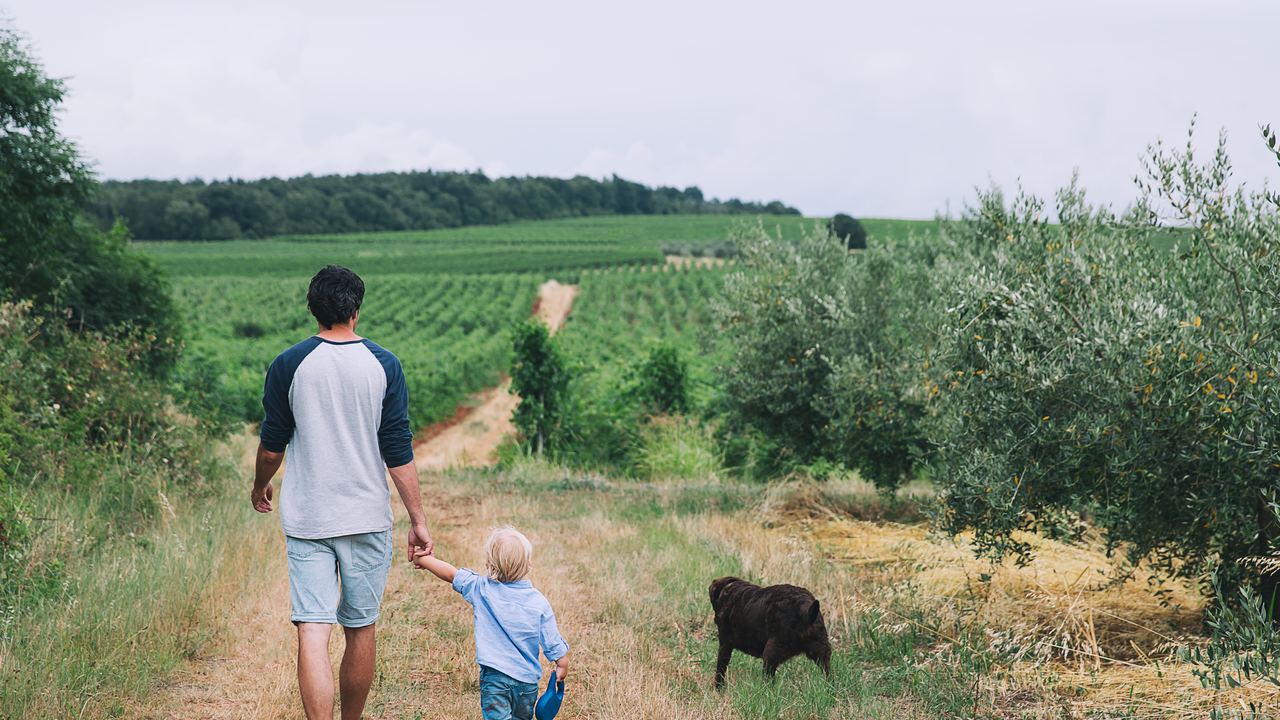
A wine tour works for someone who does not drink, but only if the day is built around the place and not around the pour. Two things tell you in a minute: how many of the stops are tasting bars, and what the day offers between them. Count those before you pay, because nothing else on a listing predicts how bored you will be by 2 p.m.
This page is for four readers who overlap: the person not drinking, the designated driver, the adult traveling with children, and the person traveling alone. A parent who is also driving is two of them at once. Some people skip alcohol for a reason that is not a preference. The CDC says there is no known safe amount of alcohol use during pregnancy and no safe time to drink during pregnancy (CDC, page last reviewed August 14, 2026). Nobody on a tour should need to explain that to a host.
How can a non-drinker tell a tour built around the view from one built around the glass?
Read the listing for the lines that do not mention wine. A walk, a village, a lunch on a terrace and a ride on a train are all stops where a non-drinker is a full guest. A tasting of five wines is a stop where you are watching. The table is our reading of how listings are usually written, not a rule, and each listing has to be read on its own.
| What to check | Built around the glass | Built around the place | What to ask |
|---|---|---|---|
| Stops | Four or five cellars, each with a tasting | One or two cellars, plus a village, a walk or a viewpoint | How many stops are a tasting bar, and how many are something else? |
| Between stops | Short drives, every stop indoors | Time outdoors: a vineyard path, a market, lunch with a view | Where do we eat, and is it outside? |
| Vehicle | Minibus on a fixed schedule | Bike, train, tram, or a flight at dawn | Who sets the pace at each stop? |
| What is poured | Only wine is mentioned | Lunch, water, juice or coffee are listed | Will the winery pour something else for a guest who is not tasting? |
| The guide | A host who pours | A driver-guide who talks about the land | Does the talk cover the vines or only the wine list? |
There is a price point here that surprises people. Not drinking does not usually make a tour cheaper. The Franschhoek Wine Tram FAQ asks "Are discounts available for students, pensioners, and non-drinking guests?" and answers "No discounts are available at this time" (Franschhoek Wine Tram FAQ). The ticket buys the ride. The operator's home page describes hop-on hop-off with tastings and meals as optional add-ons (Franschhoek Wine Tram), so a non-drinker can skip the tasting and still ride. We read only this one operator's FAQ. On other listings, look for what you are paying for and ask.
Our view: we would not book a five-cellar day for a non-drinker, even at a friendly price. That is the one case where the answer is simply no, and the next sections are about what to book instead. The general method for reading a listing is in reading a tour listing, and the four-question version is in how to choose a wine tour.
Can you visit wine country without tasting at all?
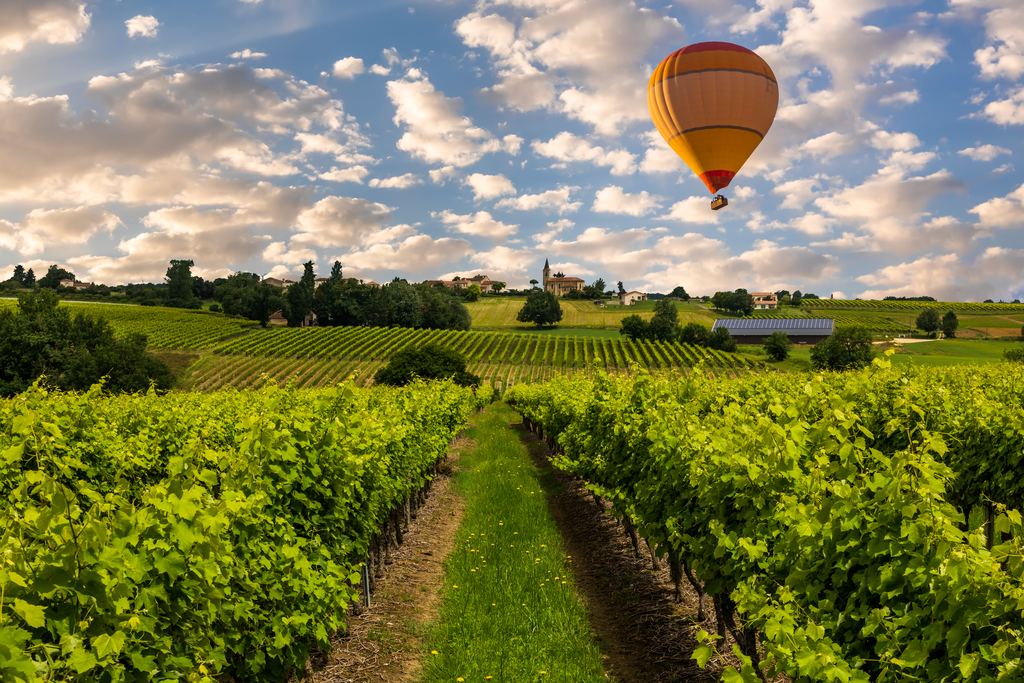
Yes, and some of the best-known ways do not depend on a glass. In Napa, Visit Napa Valley says all hot air balloon companies launch just after dawn, when the winds are calmest and the temperatures coolest, and some include a sit-down breakfast afterwards (Visit Napa Valley: hot air balloons). The page gives no minimum age for passengers, so ask the operator before you plan around a child. Flights over wine country exist elsewhere too: hotairballoon.travel is a separate site of ours for them.
On the ground, the options are slower. The same tourism board points to state parks and local trails "surrounded by vineyard views" (Visit Napa Valley: hiking), and names Bothe State Park. The Napa Valley Vine Trail describes itself as a multi-use trail separate from cars, and says it is creating a 47-mile route (Napa Valley Vine Trail).
Which ways of getting around suit someone who is not tasting?
The Douro line is the clearest case in Europe. CP says it connects Porto to Pocinho over more than 170 kilometers with 37 stations and halts, much of it alongside the river, and that from the carriage windows you can glimpse the vineyard terraces (CP Comboios de Portugal). A ticket on that train is a wine-region day that needs no tasting in it.
In Chianti the choices are humbler. The local tourism site lists bicycle rental in Castelnuovo Berardenga and Greve in Chianti, and says the Castelnuovo Scalo station sits about 7 kilometers from the town it serves (visitchianti.net). On a bike the stops are short, and the hills decide how many you make. Our rule for a non-drinker on two wheels: pick the hill you will climb last and work backwards from it. There is more on the region on the Chianti page.
In Franschhoek, the tram's own beginner guide recommends three or four wineries in a day (Franschhoek Wine Tram). For someone who is not tasting that is a long day of stops, so choose one or two and spend the rest on a meal. Napa has a wine train that runs as a dining experience, with multi-course meals and tastings on board (Napa Valley Wine Train). Its site does not say what is on offer for guests who do not drink, so ask before you book.
What do non-drinkers do while everyone else tastes?

Most of a tasting room visit is waiting for the next pour. That is fine for the person pouring and long for the person who is not. Four things make the hour work, and all four are our advice from reading listings, not rules from a source.
First, tell the host at the start that you are not tasting. Saying so early is easier than explaining an untouched glass at the third stop. Second, ask the operator by email before the day whether the winery can pour juice or water and whether there is somewhere to sit outside. Third, pick the stop with the most to do. A picnic, a garden, a cellar walk or a lunch counts as a stop where you take part. The Stellenbosch Wine Routes site carries a post about picnics at one estate, Zorgvliet, with options for families and a kiddies basket for the little ones (Stellenbosch Wine Routes). The post is about three years old, so check what is offered today. Fourth, sit one out. Twenty minutes on the terrace is a fair use of a stop.
Do not let the group skip lunch to fit in another tasting. Lunch is the stop where the non-drinker eats the same food as everyone else, and where the day evens out.
For the hour-by-hour shape of a normal tasting day, read a day of tasting.
What changes when you are the designated driver?
You carry the day. You drive between stops, you wait at each one, and you are the only person in the group with a fixed time to leave. Zero is the safest number for anyone who will drive, and we do not treat spitting as a way to stay under a limit. The Napa tourism board tells visitors to arrange alternate transportation ahead of time (Visit Napa Valley). Limits by country are on the drink-driving page, and the comparison of a tour with a rental car is on tour or rental car.
Consider who else could drive. In South Africa, the UK Foreign, Commonwealth and Development Office says driving standards vary and that fatal road accidents are common, particularly around weekends and major public holidays (UK FCDO: South Africa safety and security). The page does not single out the wine region, so read it as general background. It is a reason to give the designated driver a day off and book a driver for the Cape Winelands.
Can you take children on a wine tour?
Children do not taste. The question is where they sit for ninety minutes, what they do, and whether the place has room for them. We could not confirm from an official source any rule on children in tasting rooms for the regions we cover. It is set by the winery and, in many places, by local licensing law, so ask the winery in writing before you book. A winery that says no to children on the phone has saved you a day.
What we can source is about the transport and the day around it. The Franschhoek Wine Tram FAQ suggests its Tram First departures for travelers with little ones, and says prams must be collapsed during the journey because the vehicles have limited space (Franschhoek Wine Tram FAQ). The Stellenbosch Wine Routes post mentioned above lists a kiddies basket at one of its estates. The Napa Valley Vine Trail organization says the trail serves all ages and abilities. None of those says what any winery will allow, which is why the written question comes first.
Our choices for a day with children, from reading what operators sell. Pick one cellar with grounds over four tasting bars. Keep the vehicle private if you can, so you can leave when a child has had enough. Book the meal before the tasting, not after. And do not use a wine tour as the whole day: a walk or a balloon morning gives children something that is theirs. The Napa and Sonoma page and the Mendoza page are the regional starting points.
Is it safe to do a wine tour alone?
No official source we opened says that a wine tour is safe or unsafe, and we will not invent one. What governments do say is about the transport, and the transport is where a solo traveler is most exposed. The UK FCDO says that there have been violent incidents involving tourists at popular tourist locations in South Africa, and that tensions between e-hailing and metered taxi drivers have led to armed violence, particularly around Gautrain stations and at airports (UK FCDO). Read the current version for wherever you are going.
From that, and from reading listings, we would do these things. Choose a small group so you arrive and leave with other people. Book the way back before you book the way out: the Chianti tourism site says there are no public taxis in Greve in Chianti and lists cars with a driver (visitchianti.net), which is a bad thing to find out at the last cellar. Tell someone the route and the pick-up point. And keep your own water.

When should a non-drinker skip the wine tour?
Three cases. The first is a tasting-centered itinerary, which we described above. The second is a private car with a driver-guide and five cellars: you are one person without a glass, across from the driver at every stop. The third is a party where everyone else is a serious taster and you are not. Go for a hike, a train or a flight, meet for lunch, and compare notes at dinner.
If you are the only one in your group who does not drink, say it when you book. The operator can tell you the kind of day it will be, and it costs one message. If the group is large, the choose-a-wine-tour page covers the formats.
Questions readers ask about non-drinkers and kids
Can non-drinkers enjoy a wine tour?
Yes, if the itinerary has more to it than tasting bars. Count the stops that are not tastings, look for a meal and outdoor time, and ask whether the winery pours something other than wine. The table above sets out what to check.
Do non-drinkers pay less on a wine tour?
Not necessarily. The Franschhoek Wine Tram FAQ says no discounts are available for non-drinking guests. We read only that operator, so check the listing you are considering.
Can children go to a winery?
That depends on the winery. We could not confirm an official rule for the regions we cover, so ask in writing before you book. Children do not taste.
Is it safe to do a wine tour by yourself?
We found no official source rating wine tours. Government travel advice focuses on transport, so book your return before you set out and choose a small group. Read the current advice for your destination.
Is there a wine region trip with no tasting?
Yes. A train such as the Douro line, a dawn balloon flight, a bike or a hike all show the land without a tasting. Some can be combined with a meal at a winery if you want one.
Where these facts come from
We opened each page below on 2026-09-30 and wrote only what it says. The tables, the choices for a day with children, the solo checklist and the advice for the tasting room are our judgment, and we say so where they appear. We could not confirm from an official source any minimum age or children's rule for tasting rooms, any non-alcoholic policy at the Napa Valley Wine Train, or whether a balloon company sets a minimum age. We give no prices and no timetables.
- CDC: alcohol use during pregnancy
- Visit Napa Valley: first-timer's guide
- Visit Napa Valley: hot air balloons
- Visit Napa Valley: hiking
- Napa Valley Vine Trail
- Napa Valley Wine Train
- Franschhoek Wine Tram: home page
- Franschhoek Wine Tram: FAQ
- Franschhoek Wine Tram: beginner's guide
- Stellenbosch Wine Routes
- CP Comboios de Portugal: the Douro line
- visitchianti.net: services and transport
- UK FCDO: South Africa safety and security
Data verified on. The CDC and three Visit Napa Valley pages blocked direct access, so we read Internet Archive copies of them. Tables and advice are our judgment. Editorial Policy
Wine Tours Editorial earns a commission when you book through links on this page. It does not change the price you pay. See our editorial policy.
Start with a place where the day is more than the tasting
Open the Cape Winelands page to see how tours there are built, then read each listing for the stops that are not a tasting bar.