
To choose a wine tour, answer four questions in this order: which city you start from, how many strangers share your vehicle, which sub-zone you want to visit, and what carries you between cellars. The price, the lunch and the star rating on a listing all follow from those four.
Sometimes the answer is no tour at all. Several days in one region, one winery that only takes appointments, or a route where a train already runs the valley are the three cases we cover below, and in each of them a day tour can cost you more than it gives. We say so because a page that sells tours and never tells you when to skip one is a brochure.

Which city should your wine tour start from?
Most wine tours leave from a city, not from a vineyard. The departure point sets the drive, and the drive comes out of your tasting time. A listing that leaves from Florence and one that leaves from Siena can both say "Chianti" and still spend the morning on different roads.
Start from where you sleep, then read the destination page for that area: Chianti, Napa and Sonoma or the Cape Winelands. If you do not know the region yet, the regions page works backwards from the city you fly into.
Private, small group or large group: which one fits?
The three formats differ in things you can check before you pay: how many stops, how much say you have, and who is driving. The table is our summary of how these formats are usually sold, not a rule. Each listing sets its own cap for "small group", and we found no official definition of the term, so read the number on the listing itself.
| Format | Pace | Your say | Who drives | Usually included |
|---|---|---|---|---|
| Large group, coach or big van | Fixed stops, fixed times | Low: you leave when the group leaves | Driver, plus a guide on some listings | Transport and a set number of tastings; lunch varies |
| Small group, shared minibus | Fixed route, fewer people at each stop | Low to medium: you can ask, the group decides | Driver or driver-guide | Transport and tastings; the size cap is the listing's own |
| Private car or van with driver | You set the order within the day's bookings | High, if the cellars can take you | Driver or driver-guide | Transport for the vehicle; tastings and lunch differ by listing |
| Self-guided bike or e-bike | Slowest, fewest stops | High, but tied to cellar hours and daylight | You | Bike hire and a route; check what the tastings cost and where you pay |
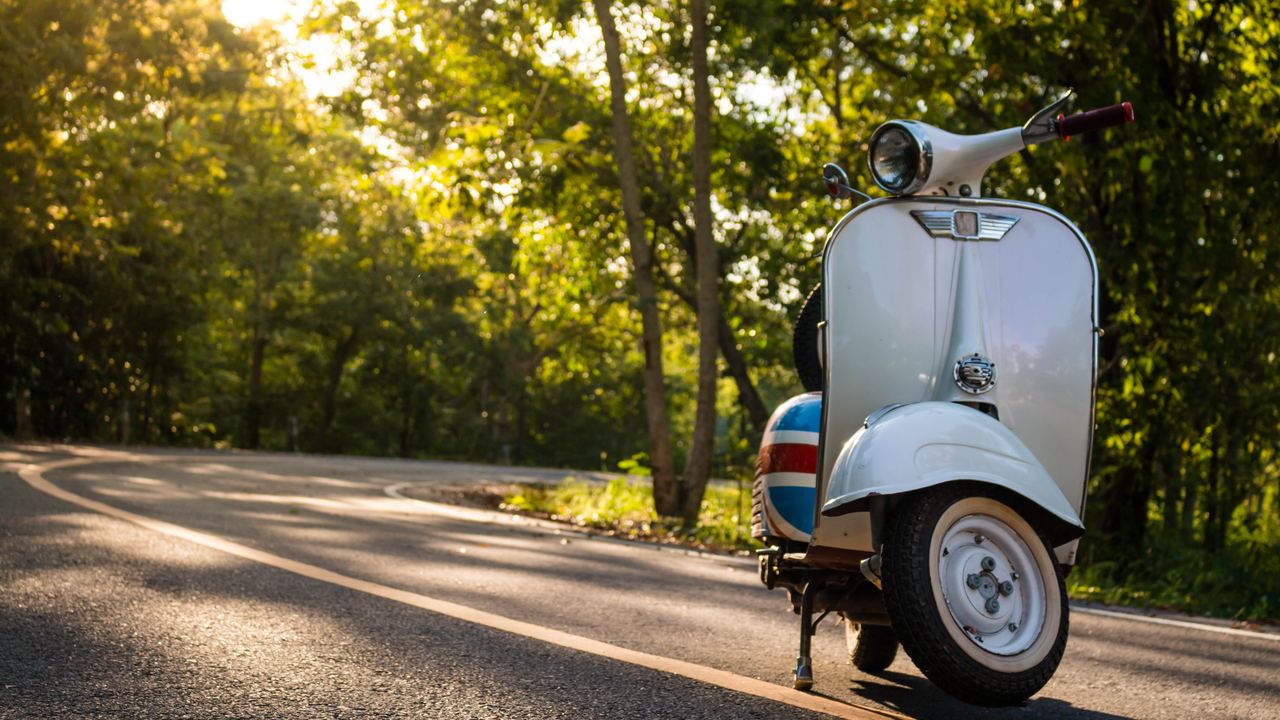
| Vintage scooter or classic car with a host | Short stops, long stretches of road | Medium | You or the host, depending on the listing | Varies widely; read the listing line by line |
Two lines in the table decide most bookings. The first is your say: in a group, the slowest lunch sets the afternoon. The second is the pricing unit. A private tour is often priced per vehicle and a group tour per person, so the option that looks cheaper can flip once you are four or five people. How a tour price is built works through an example with round, made-up numbers.
Before you book any of them, read the listing slowly. Reading a tour listing explains what "tastings" counts, what "small group" can hide, and what a "wine tour" is when the wine is one stop among five.
Which sub-zone and which vehicle?
The word on the listing is usually bigger than the place you will visit. The Chianti Classico consortium says its territory includes the whole of Castellina in Chianti, Gaiole in Chianti, Greve in Chianti and Radda in Chianti, and parts of Barberino Tavarnelle, Castelnuovo Berardenga, Poggibonsi and San Casciano Val di Pesa (Consorzio Vino Chianti Classico). A tour that says "Chianti" may stay inside that area or may not. We could not confirm from the consortium's page how it relates to the wider Chianti denomination, so compare the stop names on the listing with that list of municipalities.
The vehicle decides how many cellars fit in a day. On a bike you will visit fewer, and the last hill is decided by your legs, not by the booking. On a vintage scooter the stops are short and the photos are good, but the day is about the ride, so ask how many tastings it includes. On a minibus the limit is the itinerary. We would book a bike day only after checking the hills on the route and the closing time of the last cellar.

Which format suits your situation?
This is our judgment, not a survey. Use it to pick where to start looking, then let the listing's own details overrule us.
| Situation | Start with | Why | Watch for |
|---|---|---|---|
| Couple on a first visit | Small group or private | Someone else plans the order and drives | Whether the price is per person or per vehicle |
| Family with children | Private | You control breaks and the length of each stop | Ask each winery about children in advance; we found no official rules by country |
| Solo traveler who does not drink | Small group | A shared vehicle is company, and the tasting is one part of the day | A tasting-centered itinerary; see the non-drinkers page |
| Six or more people | One private van, or two small groups | Everyone decides together, or nobody has to | The vehicle's seat count on the listing |
| Enthusiast with named cellars | Private, or a rental car with a designated driver who does not drink | The cellars are yours, not the operator's | Appointments: many cellars need them |
| First time in wine country | Small group in one region | One day teaches you the geography before you plan your own | Stops chosen for the operator, not for you |
If anyone in your party will not drink, or travels with children, the page for non-drinkers covers how to spot an itinerary built around the view rather than the glass.

When is a wine tour the wrong answer?
Three situations, in the order we see them most.
You are staying several days in one region
A day tour is priced for a day and stops where the itinerary says. Over three or four days in the same valley you repeat the same drive from the same city, and the one thing the tour really sells, getting you there, can be bought another way: a driver for selected days, the train, or a bike. Our rule: book one guided day to learn the geography, then decide how to do the rest.
You want one winery that takes appointments
The Napa Valley tourism board tells first-time visitors that "a good rule of thumb is to assume that a reservation is most likely required" (Visit Napa Valley). For a winery you have already chosen, a tour with five stops that someone else picked is the wrong tool. Book the winery directly and ask whether they can arrange a car. We checked that guidance for Napa only. For other regions we have no official source, so we do not generalize it.
A train or a bus already does the job
The Douro line runs from Porto to Pocinho, covers more than 170 kilometers and has 37 stations and halts, and its operator says travelers see the terraced vineyards from the carriage (CP Comboios de Portugal). In Chianti, the local tourism site lists Autolinee Toscane buses, bicycle rental and taxis with a driver, and notes that the Castelnuovo Scalo station sits about 7 kilometers from Castelnuovo Berardenga (visitchianti.net). In Franschhoek there is a hop-on hop-off wine tram, which does not reach every estate and whose own guide suggests three or four estates in a day (Franschhoek Wine Tram). In Napa a historic railway runs as a dining and tasting experience (Napa Valley Wine Train), which is a tour by another name.
A service existing is not the same as it being easy. Check each operator's current timetable, because we give none here.
Our test: if you can name the cellars you want and reach the first one without driving, you need a booking, not a tour. A tour earns its price where the cellars are far apart and the public transport ends in town.

Can you drive yourself to a tasting?
Zero is the safest number. The Napa tourism board tells visitors to arrange alternative transportation ahead of time (Visit Napa Valley), and the legal limits differ by place. Utah lowered its limit from 0.08 to 0.05 g/dL, effective December 30, 2018 (Utah Highway Safety Office). Argentina's national law sets zero tolerance for alcohol while driving, approved by the Senate on April 13, 2023 (argentina.gob.ar). Limits change and this is not legal advice: check the official source for the place where you will drive.
Spitting changes the arithmetic, but not as much as people hope. The NIAAA counts a standard drink of wine as 5 fluid ounces at 12% alcohol by volume (NIAAA). We could not confirm an official tasting pour size, so do not assume a taste is a small fraction of that. Country by country, see drink-driving limits; for the hour-by-hour version of a tasting day, a day of tasting.
Choosing a wine tour: questions readers ask
Is a private or a group wine tour better?
Neither, until you know your group size and how much say you want. A private tour lets you change the order of stops if the cellars can take you. A group tour keeps the decisions off your plate. Check whether the price is per person or per vehicle before you compare them. The cost page explains how.
How many people is a small group?
There is no number we could confirm from an official source. Each listing sets its own cap, so read it on the listing, and ask the operator if it is not stated. Reading a tour listing covers the other words worth checking.
Can I visit wineries without a car?
In several regions, yes. The Douro line links Porto and Pocinho, Chianti has local buses, bike rental and taxis with a driver, and Franschhoek has a wine tram. All of these have limits, and we give no timetables, so check the operator. Tour or rental car compares the options by region.
Do I need to book a wine tasting in advance?
For Napa, the local tourism board says to assume that a reservation is most likely required. We have no official source for other regions, so we do not state a rule for them. Do you need to book lists what we could verify and what we could not.
Should I drive myself if I only taste a little?
Zero is the safest number, and the limit depends on the place: Utah is at 0.05 g/dL and Argentina at zero tolerance, for example. If you want to drive, the person who drives should not drink at all. Otherwise book a driver, a tour or a train.
Sources and method
We opened each page below on 2026-09-30 and wrote only what it says. Format descriptions, the two tables and the closing test are our judgment, and we say so where they appear. We could not confirm from an official source how the Chianti and Chianti Classico denominations relate, the size of a tasting pour, any standard definition of "small group", or reservation rules outside Napa. We give no prices and no timetables.
- Consorzio Vino Chianti Classico: the territory
- Visit Napa Valley: first-timer's guide
- Napa Valley Wine Train
- CP Comboios de Portugal: the Douro line
- visitchianti.net: services and transport
- Franschhoek Wine Tram: a beginner's guide
- Utah Highway Safety Office: 0.05 BAC law
- Argentina: alcohol cero al volante
- NIAAA: what is a standard drink
Data verified on. Facts checked against the linked pages on this date. Format comparisons are our judgment. Editorial Policy
Wine Tours Editorial earns a commission when you book through links on this page. It does not change the price you pay. See our editorial policy.
Start from the city, then pick the format
Open the Chianti page to compare tours by departure city, group size and vehicle.