
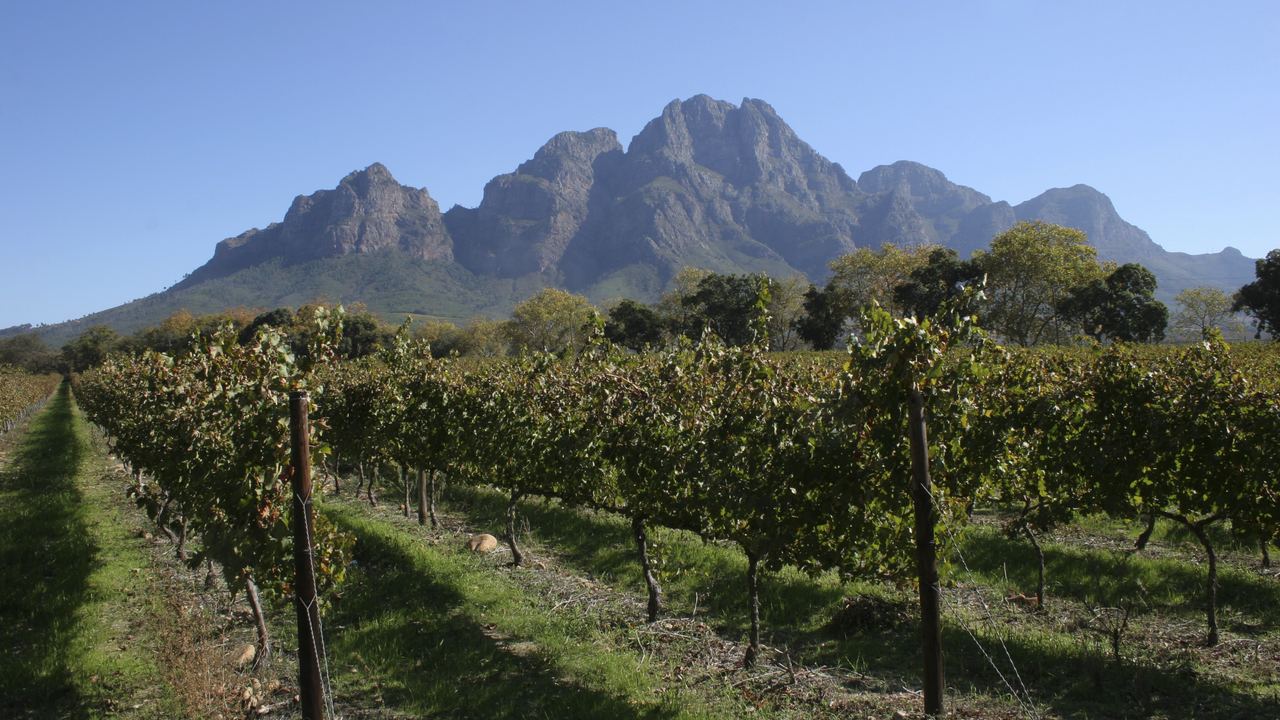
Pick Franschhoek if you want a compact day without a car, and Stellenbosch if you want a town to spend time in and the widest choice of estates. You will not do both well in one day from Cape Town. The Cape Winelands page has the tours that start there. That is our judgment, and the rest of this page shows what it rests on: how each place is laid out, what exists for getting between cellars without driving, and what the official sources say about the seasons.
The two are closer than the rivalry suggests. Franschhoek Wine Valley, the local tourism body, lists representing its members to the Stellenbosch Municipality among the things it exists to do. What differs is the shape of the day.
Stellenbosch or Franschhoek: which is the better base from Cape Town?
The table is our reading of what the sources below say. Where a source gave nothing, the cell says so and leaves the gap open.
| Stellenbosch | Franschhoek | What changes for you |
|---|---|---|
| Layout: a town with estates in five directions. The Wine Routes describe wedges radiating from the town centre. | Layout: a village in one valley, enclosed on three sides by mountains, according to WOSA. | In Stellenbosch you choose a direction before you choose an estate. In Franschhoek the valley has chosen for you. |
| Character: South Africa's second oldest town, in South African Tourism's words. Named in 1679, university founded in 1918, streets planted with oaks. | Character: Huguenot heritage, and what WOSA calls the culinary capital of the Cape. | Stellenbosch gives you a town to walk between tastings. Franschhoek gives you a short main street and a valley. |
| Wine: WOSA says the district is known for the quality of its blended reds. | Wine: the valley's tourism body promotes a Cap Classique route and calls the valley one of the leading areas for it. | Do not choose on grape alone. A single day reaches only a few estates in either place. |
| Without a car: we found no official page for a public service between wine estates. Plan on a driver or a guided day. | Without a car: a hop-on hop-off wine tram that runs in one direction on a set schedule. | This is the biggest practical difference. The tram removes the question of who drives. |
| By road from Cape Town: South African Tourism says to take the N1 and the Stellenbosch turnoff. | By road from Cape Town: the tram operator's directions go via Paarl, the Klapmuts exit, the R44 and the R45. | Franschhoek is the longer road with more turns. We found no official distance or drive time, so ask your driver. |
| Season: harvest from January to April, peak season September to April, per South African Tourism. | Season: no separate official window found. The Cape-wide window above is the one we have. | The calendar does not separate the two. The transport does. |
Pages behind the table:
What does a day in Stellenbosch look like?
Stellenbosch is a town first. South African Tourism calls it South Africa's second oldest town and describes Dutch, Georgian and Victorian architecture left by three centuries of occupation. The routes' own history page says the name was given in 1679 by the governor, Simon van der Stel, to a small island in the Eerste River, that the streets were planted with oaks, which gave the town the name Eikestad, Town of Oaks, and that a university was founded in 1918. South African Tourism's page also lists guided tours of historic Stellenbosch, so the town itself is something to do on the day.
The estates are the harder part. The Wine Routes divide the region into five sub-routes: Greater Simonsberg, Stellenbosch Berg, Stellenbosch Valley, Helderberg and Bottelary Hills. Seen from above, they say, the system resembles a series of wedges radiating outwards with the town at the centre, bordered by the N1 in the north, the Hottentots Holland mountains in the east and False Bay in the south. They add that the borders bear no relation to the legal wine wards. The sub-routes exist so that visitors can take the region in pieces.
Take that seriously. A day that tries two wedges is a day in the car. The same organisation calls itself South Africa's first wine route, and WOSA calls it the oldest in the country.
Our rule for Stellenbosch: choose one sub-route the night before and book every tasting inside it. Two sub-routes in a day turns the tasting into a commute.
What does a day in Franschhoek look like?
Franschhoek is a valley. WOSA says it lies southeast of Paarl and is enclosed on three sides by towering mountains, and regards it as the culinary capital of the Cape. A valley closed on three sides is easy to hold in your head: you are in it or you are not. The local tourism body's Cap Classique page adds that the valley is regarded as one of South Africa's leading Cap Classique producing areas, so sparkling wine is the thing the valley itself puts forward.
The day has a spine, and the spine is the tram. The Franschhoek Wine Tram FAQ says the service operates in one direction and that you get only one opportunity to disembark at each stop. The estate you skip at 10 a.m. is not available at 3 p.m. Every line has one-hour intervals at the stops. The operator's beginner's guide says it runs on a set schedule, and the FAQ says to plan on at least three hours to see a few stops. At some large estates a farm vehicle carries you from the tram platform to the tasting area, which the FAQ puts at 10 to 20 minutes from the platform, and it says to allow two hours or more for those stops. Booking ahead is highly recommended because the number of tickets per day is limited.
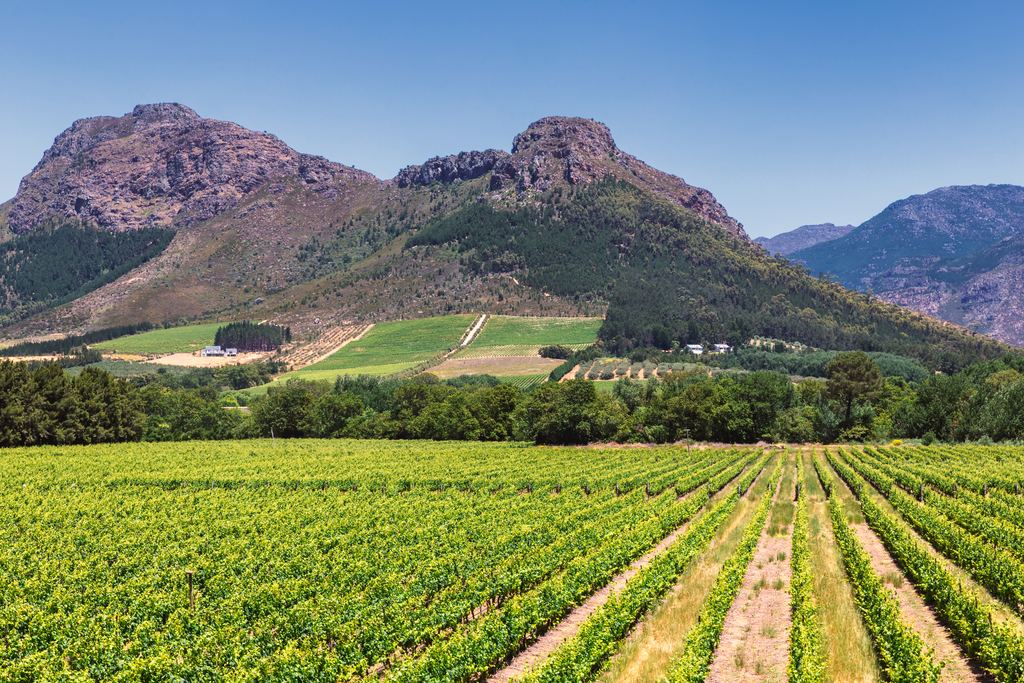
The one-direction rule is the detail we would want a reader to know before booking. It turns the tram from a bus you can ride freely into a plan you commit to in the morning: pick the estates that matter, and pick which stop is lunch. The guide lists dining at participating wineries, so lunch does not need a separate trip.
Does Franschhoek's Huguenot history change what you do there?
The heritage is real and narrower than the village name suggests. The Huguenot Society of South Africa says that after the Revocation of the Edict of Nantes in 1685 the Dutch East India Company decided to encourage Huguenot refugees to settle at the Cape to build a stronger agricultural base, and gave preference to settlers who were wine growers or had expert skills. That is the wine link, as told by the people who run the museum: the refugees were recruited partly because they could farm vines. The museum's own page says they were assimilated within a relatively short period, and that they and their descendants contributed widely to Afrikaans, religion, the arts, sport, the legal system and the economy, especially the wine industry.
What you can visit is the Huguenot Memorial Museum, whose display rooms run from a timeline through flight, sacred texts, home and family to legacy. The museum's own page says the annex shows Khoisan life in the area, that its perfume museum sits in the original slave lodge of the manor house, and that the Home room describes the slaves the Huguenots later owned. The Huguenot Monument was started in 1942 and inaugurated on 17 April 1948, to mark the 250th anniversary of the settlement celebrated in 1938.
So it is one layer of the valley, and the museum tells a wider story than the name does. If the Huguenot story is why you are coming, it is a reason to choose Franschhoek. If you are coming for the estates, the museum competes with a tasting for the same hours, and we would give it one slot. We did not open visiting hours and give none.
Can you visit Stellenbosch or Franschhoek without a car?
Franschhoek has a clear answer and Stellenbosch does not. The tram FAQ says you must start your tour at the Franschhoek terminal or at the Groot Drakenstein terminal, that a link bus runs between the two, and that there is free parking at the Franschhoek terminal, at the corner of Main Road and Cabriere Street. That is enough for a day with no driver, as long as you keep to its schedule. The tram's own site is where the current lines and times are, and we give none.
For Stellenbosch we could not open an official page describing a public service between wine estates, so we do not claim one. What exists in general is listed by South African Tourism: metered taxis, taxi apps in the cities, shuttle services at many tourist destinations and escorted tours. The UK Foreign, Commonwealth and Development Office puts Metrorail train services in the group of transport with a greater risk of theft, violence and unreliable service. It lists internationally recognised e-hailing apps where the booking is confirmed through the app, and researched private hire, among the generally safer options. So for Stellenbosch without a car we would book a driver or a guided day. Wine tour or rental car sets out that choice for other regions too.
Driving on the left and drinking: what should the driver know?
South African Tourism says South Africans drive on the left, as in the UK. Its two rules for visitors are to know where you are going, because Google Maps is not reliable in certain areas, and not to drive at night, because the lack of adequate lighting can be challenging. The FCDO says driving standards vary, fatal road accidents are common around weekends and public holidays, and at most intersections the first vehicle to arrive generally has priority. It adds that small roundabouts, called circles, are treated the same as a four-way stop.
That last rule is the one a driver from abroad gets wrong first. A circle where you expect to give way to the right is a circle where you wait your turn.
If the person at the wheel will taste, do not rent the car. Zero is the safest number for anyone who drives. Book the tram, a driver or a guided day, and read the limits on the drink-driving page before you decide anything else.
Stellenbosch is where this bites harder. Its estates are spread in five directions, so a driver spends much of the day driving. In Franschhoek the tram carries that job. We quote no legal limit here: limits change, and this is not legal advice, so check the official source for the place where you will drive.
How do harvest, heat and fires change the choice?
South African Tourism says harvesting happens between January and April, that September to April is peak season, and that from May to October you avoid the crowds and get log fires. The two places do not differ on this. The harvest season page compares the Cape with other regions, with the Wesgro and WOSA sources, so we do not repeat them.
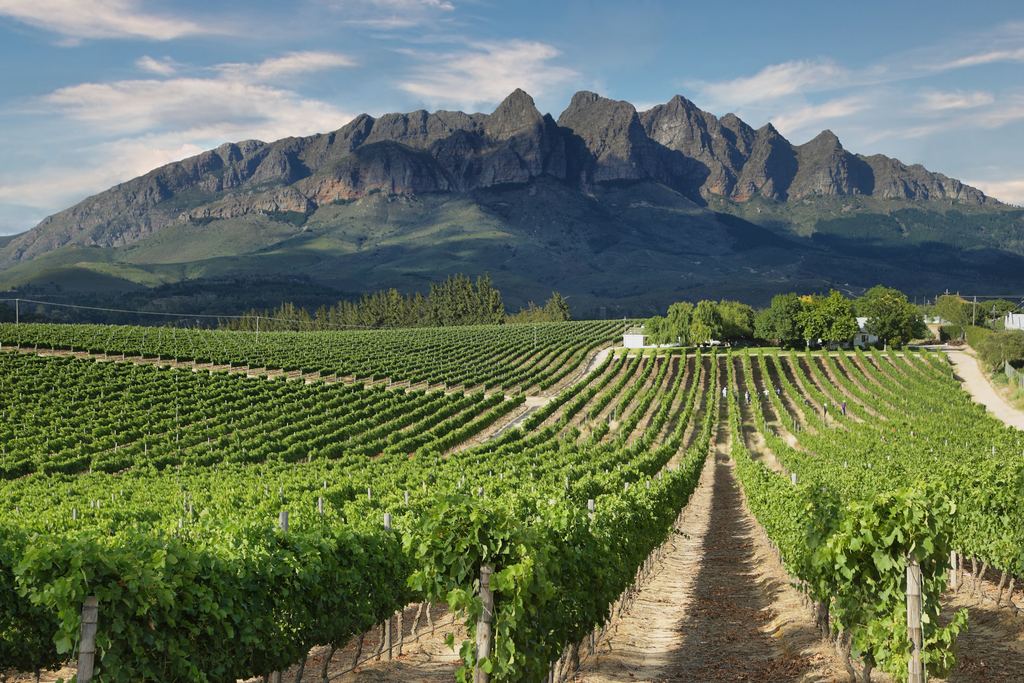
Heat and fire are the less comfortable part. South African Tourism's packing advice for Stellenbosch is sun protection in summer and a warm coat and umbrella in winter. We opened no official temperature table for either place, so we give no figures. CapeNature says the Western Cape is one of the worst-affected veld fire areas in the country, that the fire season falls in the hot, dry summer months, and that on certain days recreational fires are prohibited according to the daily fire danger rating. It adds that fires can be reported by dialling 112 from a cell phone.
Put those two pages together and the harvest months and the fire season overlap. That does not mean a summer trip is a bad idea. It means a summer booking should be one you can cancel, and an early start is worth taking: we would be at the first estate in the morning.
Which is better for a solo traveler who does not drink?
Franschhoek, for one reason: the tram takes the driver out of the day, and a solo traveler who is not tasting has nobody to share the driving with. What we verified about the tram ticket for non-drinkers is on the page for non-drinkers and we do not repeat it. What we add here is about the day. With one-hour stops and one direction of travel you will see three or four estates, so decide which of them is for eating and not for tasting. The guide lists dining at participating wineries.
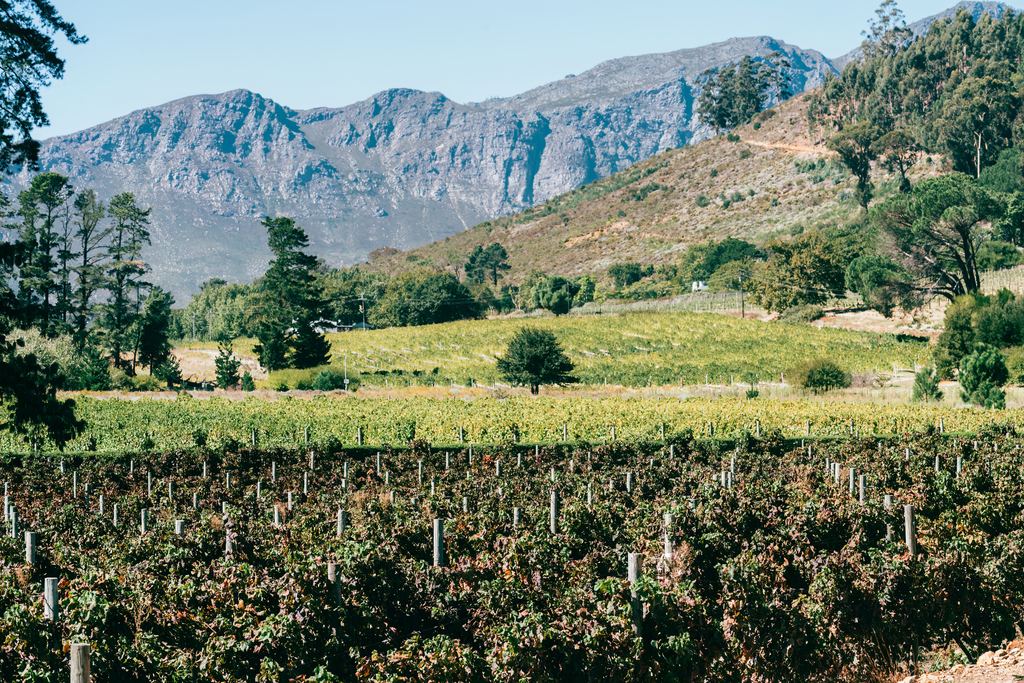
In Stellenbosch the non-tasting half of the day is the town. South African Tourism lists guided tours of historic Stellenbosch and of the Kayamandi township, and those do not need a glass. If you choose Stellenbosch, book the town for the morning and one estate for the afternoon, with a driver, and keep the booking that brings you back confirmed by the app or the operator. For a lone traveler the FCDO's list of safer transport is the one to follow.
Can you do Stellenbosch and Franschhoek in one day?
No, not well. The tram FAQ says to plan on at least three hours for a few stops, the valley's larger estates can take two hours or more each, and Stellenbosch's sub-routes are wedges. On a map it is possible: the tram operator's directions for visitors coming from Stellenbosch use Adam Tas Road and Helshoogte Road, and South African Tourism names Helshoogte among Stellenbosch's mountain roads. But a day that ends with a long drive between two places is one where somebody is tired at the last tasting. We would pick one. If you have more time, the table is how we would spread it. How to choose a wine tour covers the format, and the regions page starts from the city you fly into. For the country as a whole, see South Africa.
| Time you have | What we would do | Why |
|---|---|---|
| One day | Franschhoek by tram if nobody wants to drive. Stellenbosch with one sub-route and a driver if you want a town. | Each is a complete day by itself. Trying both is the mistake. |
| Two days | Franschhoek on the tram first, Stellenbosch second. | Do the fixed schedule while you are fresh, and leave the flexible day for the one that can absorb a late start. |
| Three days | Add a second Stellenbosch sub-route on its own day, or give the Huguenot museum a morning. | A second wedge is a new day out. A museum is a change of pace from tasting. |
Where to read next
The destination pages and the guides these choices lean on.
Cape Winelands wine tours
The destination page for Stellenbosch, Franschhoek and the other towns reached from Cape Town.
Wine tours in South Africa
The country page, for how the Cape fits with the rest of the tours we cover.
Wine tours for non-drinkers
How to tell a tour built around the place from one built around the glass.
Wine tour or rental car
When driving yourself beats a tour, and when it is the harder way to do the day.
Questions about Stellenbosch and Franschhoek
Is Stellenbosch or Franschhoek better for a first visit?
Franschhoek for a first day without a car, because the wine tram removes the driving. Stellenbosch for a first visit if you want a town and will hire a driver or a guide. Neither is the better wine region, and one day covers only one of them.
Can you visit both in one day from Cape Town?
It is possible on a map and we would not do it. The tram alone needs at least three hours by its own FAQ, and Stellenbosch's estates sit in five sub-routes. Choose one for the day and see the other on a second day.
Is there a wine tram in Stellenbosch?
We found no equivalent on an official page. The hop-on hop-off service we could confirm is the Franschhoek Wine Tram. For Stellenbosch, plan on a driver or a guided day, as in our tour or rental car page.
Which side of the road do you drive on in the Cape Winelands?
The left, according to South African Tourism. Small roundabouts, called circles, are treated like a four-way stop, says the FCDO. If the driver will taste, book a driver instead.
When is the harvest in Stellenbosch and Franschhoek?
South African Tourism says harvesting happens between January and April. We found no separate window for each place. See the harvest season page for the Cape against other regions.
How we checked these facts
We opened each page below on 2026-09-30 and wrote only what it says, checking numbers and quoted details against the page text. The WOSA page no longer opens on the live site, so we read an archived copy of it dated 5 June 2026. The table, the rules and the day plans are our judgment, and we say so where they appear. We did not find an official distance or drive time from Cape Town to either place, or an official page on a public service between Stellenbosch estates, so the page gives neither. We quote no drink-driving limit, and no prices, timetables or estate names as recommendations.
- South African Tourism: Stellenbosch Wine Routes
- South African Tourism: know before you go
- Stellenbosch Wine Routes: five sub-routes
- Stellenbosch Wine Routes: our story
- Stellenbosch Wine Routes: 50 years
- WOSA: Winelands of South Africa (archived copy)
- Franschhoek Wine Valley
- Franschhoek Wine Valley: Cap Classique route
- Franschhoek Wine Tram
- Franschhoek Wine Tram: FAQ
- Franschhoek Wine Tram: beginner's guide
- Huguenot Society of South Africa: history of the Huguenots
- Huguenot Memorial Museum
- Huguenot Monument
- UK FCDO: South Africa safety and security
- CapeNature: fire prevention
Data verified on. Facts checked against the linked pages on this date; WOSA read from an archived copy. Tables and day plans are our judgment. Editorial Policy
Wine Tours Editorial earns a commission when you book through links on this page. It does not change the price you pay. See our editorial policy.
See how the Cape Winelands tours are built
Open the destination page, then read each listing for where it starts, how it moves and how many stops it makes.