

Plan a wine tour in this order: where you sleep, how you get between cellars, when you go, what you pack, how many stops you fit and what you book, which tour you choose, what its listing really says, what it costs, and who drives. Most people start with the cellar. We would start with the bed.
The order matters because each decision narrows the next. The base town fixes the roads and the sub-zone. The way you move fixes who can taste. Nine pages on this site settle one decision each, and this page does not repeat them. It puts them in sequence, adds a booking checklist counted in weeks, and walks one day through all of it. Who drives is the one decision you make twice: a first guess at step two, and a check against the law at step nine.
In what order should you plan a wine tour?
Read the table top to bottom once, then open only the pages for the rows that are still open for you. The middle column says what each decision settles, so you can tell whether it is already settled by an earlier one.
| Step | Decision | What it settles | Where to read |
|---|---|---|---|
| 1 | Where you start from | The base town, the sub-zone, how much of the day the road takes | Choose a wine tour; Choose your wine region |
| 2 | How you move between cellars | Car, tour, train, bus, bike or a driver, and so who can taste | Wine tour or rental car |
| 3 | When you go | Harvest, heat, rain, and how busy the cellars are | When to visit wine regions |
| 4 | What you pack | Layers for cellars, shoes for gravel, sun cover | What to wear and pack |
| 5 | How many stops, and what you book | The pace of the day and which slots need a reservation | A day of tasting; Do you need reservations |
| 6 | How you choose the tour | Private, small group or large group; a tasting day or a landscape day | Choose a wine tour; Tours for non-drinkers |
| 7 | What the listing says | Hours at cellars, wines poured, what the words leave out | Read a tour listing |
| 8 | What it costs | Seat, vehicle or group; fees paid on the spot | What a wine tour costs |
| 9 | What you drive | The legal limit, the lower limits, who stays at zero | Drink-driving limits |
The pages in the same order, each with the line that says if you need it:
- How to choose a wine tour: four questions, and three cases where a tour is the wrong answer.
- Wine tour or rental car: what exists without a car in Chianti, Champagne, Saint-Emilion, Napa, the Douro and Franschhoek.
- What to wear and pack: sorted by condition, not by winery.
- A day of tasting: the hour-by-hour day and the arithmetic of the pours.
- Do you need reservations: the booking rules we could verify, and the ones we could not.
- Wine tours for non-drinkers, drivers and kids: how to tell a tasting day from a landscape day.
- Read a tour listing: 41 phrases decoded, each with the question to send.
- What a wine tour costs: how a price is built, with an invented example.
- Drink-driving limits: the limit for each country we cover, with the source and the date.
Step three lives in the when-to-go section, with pages on harvest timing and on weather and climate.
Why does planning start at where you sleep, not at the cellar?
Because the cellar is the last thing you can fix. Most wine tours leave from a city, not from a vineyard, and the drive comes out of your tasting time. Two listings can both say "Chianti" and spend the morning on different roads. The word on the listing is usually bigger than the place: the Chianti Classico consortium lists the whole of Castellina, Gaiole, Greve and Radda in Chianti and only parts of four other municipalities (Consorzio Vino Chianti Classico). A tour that says "Chianti" may stay inside that area or may not.
So the first decision is a bed, then a region, then a sub-zone, in that order. If you do not know the region yet, the regions page works backwards from the city you fly into. Only after that does "which cellar" mean anything.
Our rule: if you can name the cellars you want and reach the first one without driving, you need a booking, not a tour. Decide the base first and that sentence becomes easy to test.
How do you move between cellars, and why does it decide who tastes?
Rent a car only if the person at the wheel will drink nothing all day and the cellars are too far apart for a bus or a train to reach. Every other case makes the car the harder way to do a wine day, and in some places worse than harder: a town center closed to traffic, a road that keeps to the left, a limit lower than you expect. The rental car page goes region by region.
The honest exception is the sober driver with two or three booked cellars in one valley. A tour sells that person very little. The opposite case is a valley built for cars: Visit Napa Valley describes five towns spread over about 30 miles (Visit Napa Valley). And a train is not a tour either. CP Comboios de Portugal says the Douro line runs from Porto to Pocinho, more than 170 kilometers, with 37 stations and halts (CP Comboios de Portugal). It carries you along the river, and a cellar visit is still a separate arrangement.
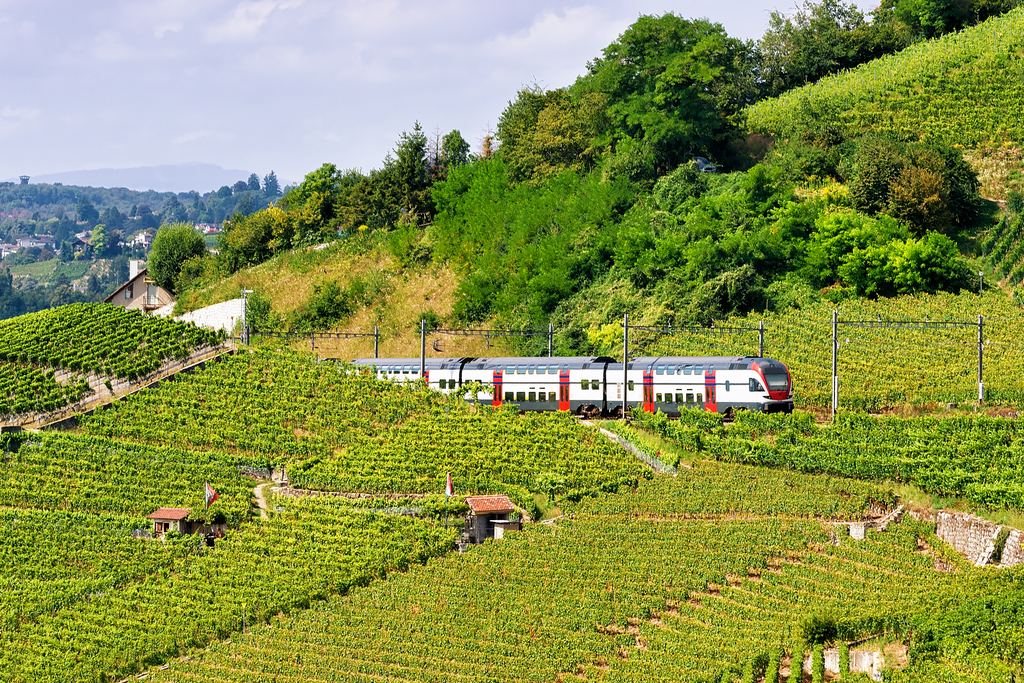
When do you go, and what do you pack?
Season is decision three because it changes two earlier ones without asking. In harvest the cellars are working, and that is the time to add a week or two to every booking lead time in the checklist below, as we advise on the booking page. Heat changes who should be at the wheel at 3 p.m. Rain changes the shoes. The harvest page and the weather and climate page carry the calendars and the normals.
Packing comes after the date for the same reason. Dress for the weather and the floor first: gravel car parks, steps down to the cellar, cobbles in old villages. Bring a layer for any tour that includes a cellar or a cave. The Comité Champagne figure of about 12 °C belongs to Champagne, and we have no cellar figure for other regions, so the layer is our habit and not a rule. The packing page sorts the rest by condition.
How many stops fit in a day, and what should you book?
Three wineries is a full day, and four is the ceiling unless the stops are short. That is our judgment on the day of tasting page, and the Franschhoek Wine Tram's own guide lands in the same place with 3 to 4 wineries. The reason is not time. It is the pours. Twenty one-ounce pours are 20 fluid ounces, and NIAAA counts a standard drink of wine as 5 ounces at 12% alcohol by volume (NIAAA). Four standard drinks, if you swallow everything, and twice that at two ounces a pour. Pick the number of pours first and fit the stops around it.
Booking follows the same logic. Visit Napa Valley says to assume a reservation is most likely required. Sonoma County Tourism says to book in advance for a party of five or more (Sonoma County Tourism). Outside those two valleys the booking page marks most regions "not verified", and we do not stretch the Napa rule over Italy or Portugal. The checklist below is our advice, in weeks, and it follows the lead times on that page.

What should you book how many weeks ahead?
Counted back from the day of the tasting, not from your flight. Every number is our advice. No official source gives a lead time, and a small cellar can answer slower than any table here.
| When | Do this | Why |
|---|---|---|
| 6 weeks or more | Choose the base town and the region. Decide whether anyone will drive. | Everything else depends on these two |
| 3 to 4 weeks | Book a guided cellar visit or any appointment-only experience, and a named winery you will not drop. | Places are limited and a guide leads the group |
| 3 to 4 weeks | Book a private car or driver once the dates are fixed. For a tram or a train day, buy the vehicle ticket and the estate tastings as two bookings. | A vehicle is one booking and the cellars are another |
| 2 weeks | Write to a small cellar that only answers by email: date and a second choice, party size, how you arrive, who will not taste. | Do not count on a same-day reply |
| 1 to 2 weeks | Book a standard tasting at a winery with an online form. | Enough time to move the plan if the slot is gone |
| As soon as the group is fixed | Book for a party of five or more. | Sonoma asks groups of five or more to book in advance |
| In harvest season | Add one or two weeks to each line above. | Cellars are working |
| 1 week | Send the three listing questions: hours at cellars, wines poured, price unit. Compare two totals for your own party. Check the last train or bus home. | The reply is the contract you actually have |
| The day itself | For a walk-in room, call on the way. | Sonoma's own advice is to let the winery know you are on the way |
If the plan changes after you book, tell the winery or the operator as soon as you know. We verified no cancellation terms for any region, because each one sets its own.
How does one day work from start to finish? A day from Greve in Chianti
Take two couples, one day, four adults who all want to taste. We use Chianti because the facts are the ones we have checked. The numbers about prices in this example are invented, and the road facts come from the official or local pages named in each step.
Step 1: the base
We sleep in Greve in Chianti. The municipality sits entirely inside the Chianti Classico territory as the consortium describes it, so a listing that says Chianti Classico and stops at Greve is not stretching the word. The local tourism site lists a bus from Florence run by Autolinee Toscane as line 365, paid and free parking, and Piazza Matteotti as a limited traffic zone in summer. It also says there are no public taxis in Greve and lists cars with a driver (visitchianti.net). That last line is a planning fact: the way back from the last cellar has to be arranged before the way out. We could not confirm from an official source how the wider Chianti denomination relates to Chianti Classico, so we compare stop names, not labels. See Chianti from Florence.
Step 2: the vehicle, and who drives
Everyone tastes, so the rental car is out. That is the first row of our table on the rental car page. The local site lists bicycle rental and cars with a driver, so the realistic options are a bike, a group tour or a private driver. For four adults we pick the driver. Whether that beats a group tour depends on the pricing unit: in the invented example on the cost page, a private vehicle only won at six guests once the fees paid at the cellar were counted. Run your own numbers on a real listing.
Step 3: the law, as a check
With a hired driver the limit does not bind you, but the driver is a professional, and Italian law sets zero for professionals and for anyone under 21 or in the first three years of a category B licence (Normattiva, Highway Code art. 186-bis). If a friend under 21 offers to take the wheel, the answer is zero for them too. Zero is the safest number, and the limits page has the general figure and the source. Limits change and this is not legal advice.

Step 4: stops, lunch, bookings
Three cellars, lunch between the second and the third. We found no official booking rule for Chianti Classico, so the checklist applies as written: the guided visit is requested three to four weeks ahead, the ordinary tasting one to two. Lunch is a sit-down meal of about an hour and a half, and a table booked for 1 p.m. that slips to two is the usual way the third cellar disappears. Before lunch ends, check the closing time of the last stop. The day of tasting page has the full hour-by-hour version.
Step 5: if you book a tour instead
Then the work moves to the listing. Ask three questions before you pay: how many hours are spent at cellars, how many wines are poured, and whether the price is per person or per vehicle. A listing that cannot answer is not wrong, only unfinished, and we would move on. The long version, with 41 phrases, is how to read a tour listing.
The result is a day with one base, one vehicle, three cellars and a lunch, and nothing in it that was decided at the third cellar. For the next step into the region, the destination page for Chianti lists what we sell there.
What do people get wrong when they plan a wine tour?
Three mistakes, each repeated across the pages above.
They choose the cellar before the base
A tour that "includes tastings" rarely promises which cellar, so it does not reserve the one you had in mind. If you have a winery in mind, a day with five stops chosen by someone else is the wrong tool for that job. Book the winery directly, ask whether it can arrange a car, then decide whether the rest of the day needs a tour. This is the point of choosing a wine tour and of the booking page.
They count the stops and not the pours
Four wineries with five pours each is 20 pours. At two fluid ounces that is 40 ounces, or eight standard drinks of wine at 12%, if you swallow every one. The arithmetic is ours, built on the NIAAA standard drink, because we could not confirm an official tasting pour size. The limits on the drink-driving page are measured in blood or breath, not in pours, and Spain's traffic authority says the only truly safe rate is 0.0 g/L. A designated driver who "shares" the role between cellars is the usual way the plan fails.
They compare prices that are in different units
A per-vehicle price looks huge next to a per-person price because you are comparing a car with a seat. And a per-vehicle price has a cliff: seven guests in a six-seat car need two cars. Enter your date and party size before you compare anything. What a wine tour costs builds the comparison step by step.
When do you not need nine decisions?
When you have one cellar and one date. Then book that cellar, ask about a car, and read only the drink-driving page. When you stay several days in one valley: book one guided day to learn the geography, then decide how to do the rest. And when you travel with someone who does not drink, start from the non-drinkers page, because it changes step two and step six at once. A tour centered on the tasting bar is a long day for a person with no glass.
Questions about planning a wine tour
Planning a wine tour: questions readers ask
How far ahead should you plan a wine tour?
No official source gives a lead time. Our advice is three to four weeks for a guided cellar visit or an appointment-only experience, one to two weeks for a standard tasting, and an extra week or two in harvest season. The checklist above lists each line. Read the booking page for what we could verify.
What do you decide first when planning a wine tour?
The base town, not the cellar. The base fixes the roads, the sub-zone and how much of the day is driving. After that you choose how to move, and that choice decides who can taste. How to choose a wine tour has the four questions.
How many wineries should you plan for in one day?
Three is a full day and four is the ceiling unless the stops are short. Count pours as well as stops: twenty pours add up to several standard drinks if you swallow them all. See a day of tasting.
Is it better to book a tour or rent a car for wine tasting?
Rent a car only if the driver will taste nothing and the cellars are too far apart for a bus or a train. Otherwise a tour, a train or a driver is easier. Wine tour or rental car compares the options by region.
Can you plan a wine tour if you do not drink?
Yes, if the day is built around the place and not the pour. Count the stops that are not tasting bars and look for a meal and outdoor time. The non-drinkers page sets out what to check.
The nine pages behind each decision
One page for each step, in the order we would read them.
How to Choose a Wine Tour (and When Not to Book One)
Four questions pick the tour, and three cases where no tour is the better answer.
Wine Tour or Rental Car? When to Drive Yourself
What exists without a car in six regions, and where a sober driver beats any tour.
What to Wear and Pack for a Wine Tour
Layers, shoes and sun cover, sorted by the condition you will meet.
How Many Wineries Can You Visit in a Day?
The day hour by hour, the arithmetic of the pours, and when to spit.
Do You Need Reservations for Wine Tasting? What We Could Verify
Napa says assume yes. For most regions we found no official rule, and we say so.
Wine Tours for Non-Drinkers, Drivers and Kids
How to tell a tour built around the view from one built around the glass.
What's Included in a Wine Tour? How to Read a Listing
Forty-one listing phrases decoded, each with the question to ask before you pay.
How Much Does a Wine Tour Cost? What the Price Is Made Of
Per person, per vehicle or per group, with a worked example in invented numbers.
Drink Driving Limits at Wine Tastings, Country by Country
Each limit with its official source and the date we checked it.
Sources and method
We opened the pages below on 2026-10-01 and read the raw text for each figure and quotation we use here. Everything else on this page comes from our nine planning pages, each of which lists its own sources and the date it was checked. The order of the decisions, the checklist in weeks and the worked day are our judgment, and we say so where they appear. We could not confirm a booking rule for Chianti Classico, an official tasting pour size, or how the wider Chianti denomination relates to Chianti Classico. We give no prices and no timetables.
Data verified on. Quotes and figures re-read on the linked pages on this date. Order, checklist and worked day are our judgment. Editorial Policy
Wine Tours Editorial earns a commission when you book through links on this page. It does not change the price you pay. See our editorial policy.
Start with the base, then pick the format
Open the Chianti page to compare tours by departure city, group size and vehicle.