
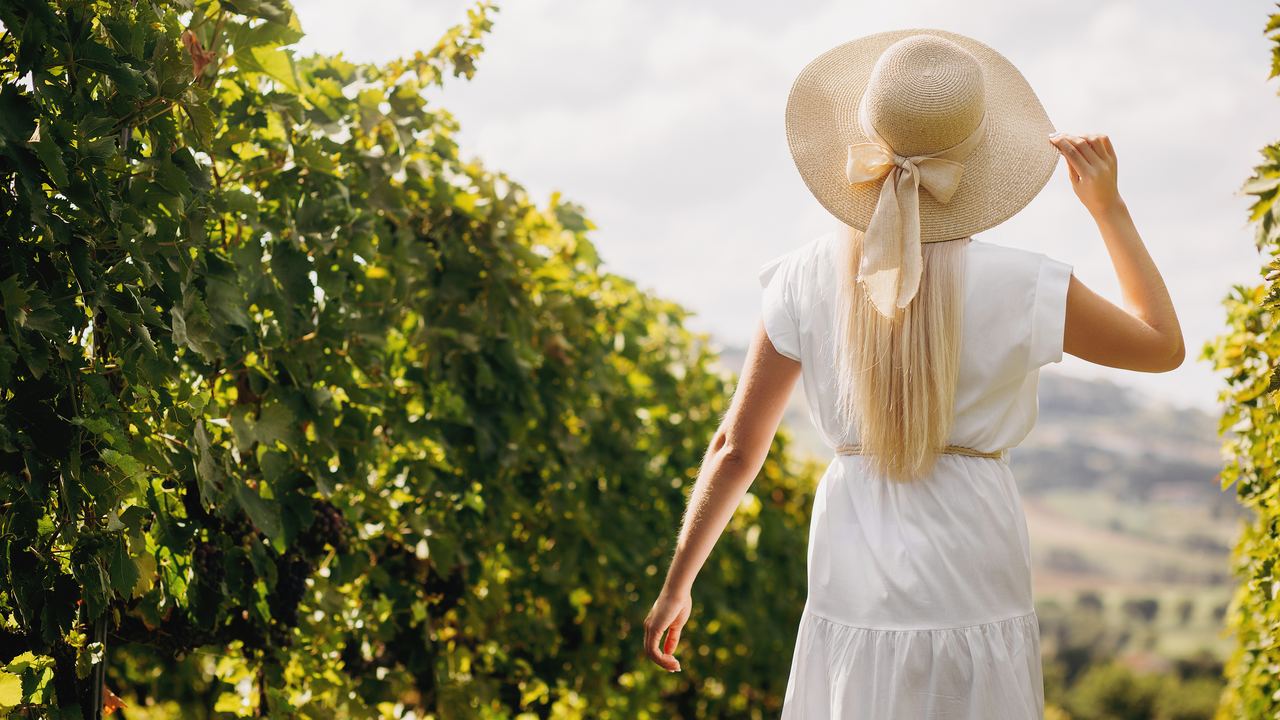
At St. Helena, in the Napa Valley, the August afternoon averages 31.6 °C and the August night 13.2 °C (NOAA, 1991-2020 normals for the St. Helena station). That is a swing of more than 18 degrees inside one day, and it is the packing list in one line: something light for the terrace at 3 p.m., something warm for the cellar, and something for the ride back after dark. What to wear to a wine tasting depends less on the winery than on the weather, the floor and the vehicle.
The dress code itself is relaxed almost everywhere we could check. The rest of this page is sorted by the condition you will meet: cellars, heat, cold, sun, the bike or the tram, and the things worth leaving at the hotel. We give a temperature only where we opened an official table. Everything else is labeled as our judgment.
What is the dress code for a wine tasting?
Visit Napa Valley, the valley's tourism board, tells first-time visitors that jeans are perfectly acceptable and that nobody will mind sandals. It adds that a more upscale winery may call for dressing up a little (Visit Napa Valley). We found no official dress code for other regions, so we do not state one. If a booking needs more than casual clothes, such as a seated lunch, the confirmation should say so. Read it.
Our rule: dress for the weather and the floor first, for the photo second. A linen shirt that looks right at noon does nothing for you in a cold cellar at 4 p.m.
Do you need a jacket in a wine cellar?
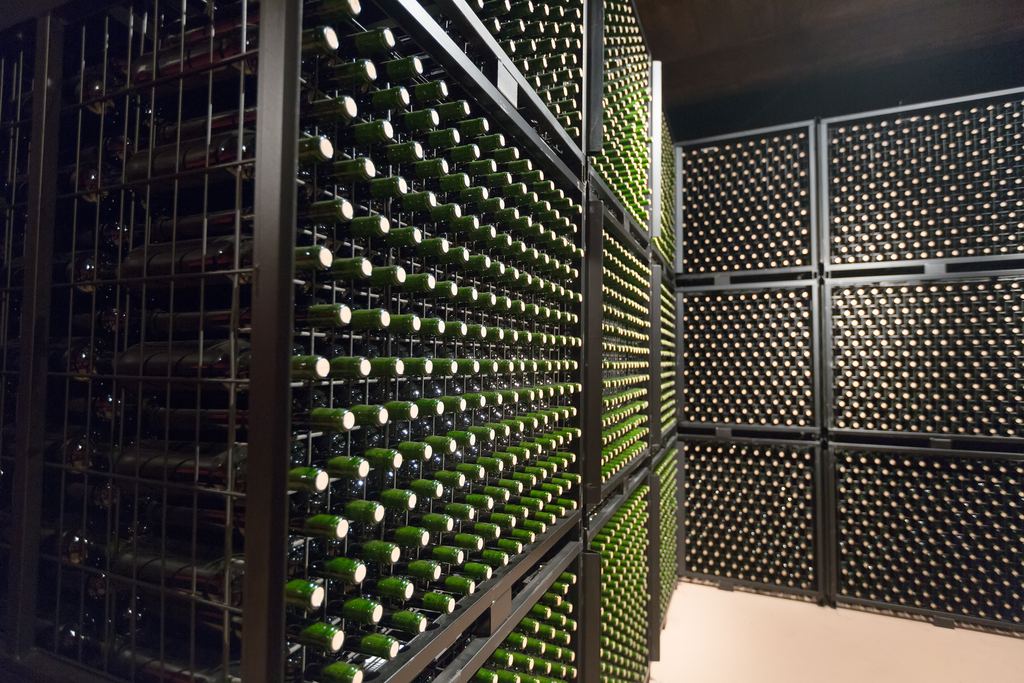
Yes, if the tour includes one. The Comité Champagne says the region's cellars stay at around 12 °C, which it describes as a steady, cool temperature for ageing (Comité Champagne). The Napa tourism board warns that some tastings and tours happen in chillier wine caves or temperature-controlled areas, and recommends layers for that reason.
The two numbers come from different places, so do not subtract one from the other. The point is that neither matches what you feel in the car park. Cellar stops also tend to run longer than tasting-room stops, because someone explains the barrels, and standing still in a cool room is colder than walking through one. We would bring the layer even in August. Details for each place are on the Champagne and Napa and Sonoma pages.
Which shoes work in vineyards, cellars and old villages?
The Franschhoek Wine Tram's own guide lists comfortable shoes for walking around the wineries (Franschhoek Wine Tram). The rest of this section is our judgment, not a rule. Wineries mean gravel car parks, dirt between the rows, steps down to the cellar and, in old hill villages, cobbles. Tasting bars often mean standing for an hour.
We would wear closed or sturdy flat shoes with a sole you can stand on. Sandals are fine at a terrace tasting, as the Napa board says, but not on a day with a vineyard walk. Skip heels. A stiletto in gravel is a short story with a bad ending.
What should you wear in each climate?
The table pairs each condition with the figure we opened and the source. The last column is what we would put on, and it is our judgment. For regional normals across the other destinations, the weather and climate page is the place to look.
| Condition | Figure we opened | Source | What we would wear |
|---|---|---|---|
| Hot, dry valley floor in summer (St. Helena, Napa Valley) | August average high 31.6 °C, low 13.2 °C | NOAA normals 1991-2020 | Light long sleeves, hat, sturdy flat shoes, a fleece in the bag for caves and dusk |
| Cooler southern end of the same valley (Napa Airport station) | August average high 26.7 °C, low 12.4 °C | NOAA normals 1991-2020 | Layers: a mild afternoon and a night that needs a sweater |
| Napa Valley winter (St. Helena, January) | Average high 14.9 °C, low 4.6 °C, 164 mm of rain | NOAA normals 1991-2020 | Waterproof jacket and closed shoes; a dry pair if you will walk the rows |
| Champagne, any month | Cellars around 12 °C; annual average 11 °C; below -10 °C recorded in places | Comité Champagne | A warm layer in every month, closed shoes for cellar steps |
| Ontario icewine harvest | Air at or below -8 °C when the frozen grapes are picked | Wine Country Ontario | Insulated boots, hat and gloves if your visit includes the vineyard |
| Franschhoek valley | Weather described as unpredictable; check the forecast | Franschhoek Wine Tram | Layers, hat, sunscreen, comfortable shoes |
Read the table with one caution. The stations are not vineyards. St. Helena is a town on the valley floor, the airport sits at the cool southern end, and a hillside block can differ from both. The -8 °C figure is the legal condition for picking icewine, not the temperature of a visit, and we could not confirm a typical visit temperature from an official source.
How much sun protection does a tasting day need?
The World Health Organization says sun protection measures should be used when the UV index reaches 3 or above. UV is highest under cloudless skies but can be high with cloud cover, and reflective surfaces such as water, sand and snow increase it (WHO fact sheet on ultraviolet radiation). WHO also says UV peaks in the four hours around solar noon (WHO UV index Q&A), which is exactly when a terrace tasting or a vineyard walk tends to happen.
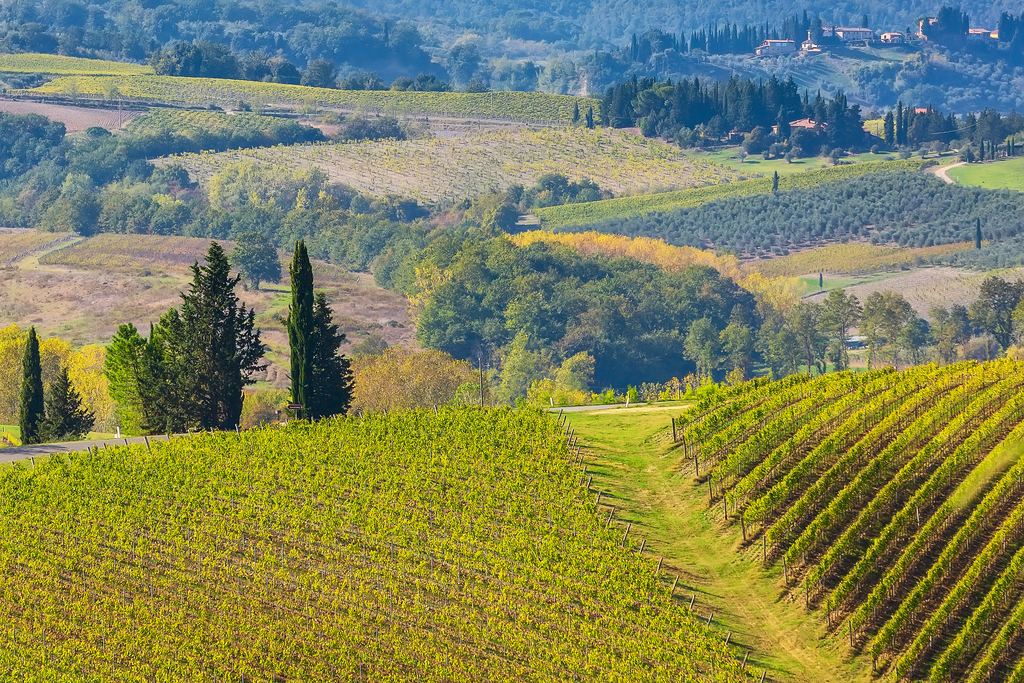
The US Centers for Disease Control and Prevention lists the same tools: shade, clothing that covers arms and legs, a wide-brimmed hat, wraparound sunglasses that block UVA and UVB, and broad-spectrum sunscreen with SPF 15 or higher (CDC, skin cancer prevention). Between vine rows there is rarely any shade, so the hat does the work. It is also the item that travels worst in a minibus. We bring one that folds.
What should you wear on a bike, a scooter or the wine tram?
A bike day in a region like Chianti is possible: the local tourism site lists several rental shops in Castelnuovo Berardenga and Greve in Chianti (visitchianti.net). Our advice is our own. Wear clothes you can sweat in, carry a layer for the downhill stretches, choose closed shoes and use a small backpack rather than a shoulder bag. On a bike you are also the driver, so read the drink-driving page before you plan the tastings. See also Chianti.
The Franschhoek tram is the opposite case. Its guide recommends a fully charged phone or camera, sunscreen, a hat, comfortable shoes and a tote bag if you plan to buy wine. For a vintage scooter or classic car with a host, ask the operator what they require you to wear and whether helmets are provided. We do not state legal rules here, and they differ by country.
Does the season change what you pack?
Yes, in two ways that have nothing to do with temperature. During harvest, Sonoma County's tourism board says wine grapes are picked from August to October, often at night or early in the morning when it is cooler, and that several wineries host guided vineyard walks while the work is on (Sonoma County Tourism). A harvest walk means shoes you do not mind getting dirty. Our harvest season page covers the calendar.

In winter the extreme case is icewine. Wine Country Ontario says the grapes must be naturally frozen on the vine and picked and pressed while the air stays at or below -8 °C, and that a crew goes out in the middle of the night to pick them by hand (Wine Country Ontario). If a winter tour in Niagara-on-the-Lake includes the vineyard, pack for that cold, not for the tasting room.
What should you leave at the hotel?
This is the part of the list that most packing pages skip. All of it is our judgment, and none of it is a written rule.
- Heeled shoes, for the gravel reason above.
- Strong perfume or cologne. A tasting is an exercise in smelling the glass, and the room is small. We could not confirm a written rule from an official source, so treat it as courtesy. Put sunscreen on at the hotel and let it dry, rather than at the bar.
- White or pale clothes. A swirl that goes wrong lands on the person holding the glass. Darker or patterned fabric hides more.
- A full-size backpack. Cellars are cramped and a minibus fills fast.
What goes in a day bag for a wine tour?
Start from the Franschhoek tram list: a charged phone or camera, sunscreen, a hat, comfortable shoes and a tote bag for anything you buy. Add water, a power bank, because photos and e-tickets drain a phone faster than you expect, and the layer, packed small. Food and pacing are covered in a day of tasting, and a day where you taste nothing is on the non-drinkers page. To pick the format before you pack, start at how to choose a wine tour or go back to the planning hub.
What to wear and pack: questions readers ask
What should I wear to a wine tasting?
Clothes for the weather and the floor. Visit Napa Valley says jeans are fine and sandals will not raise eyebrows, and that a more upscale winery may call for a little more. Bring a layer for cellars and dusk. The day of tasting page covers the rest of the day.
Do I need a jacket for a winery tour?
If the tour includes a cellar or cave, yes. The Comité Champagne says its cellars stay around 12 °C, and the Napa tourism board warns of chillier caves and recommends layers. A jacket that packs small costs nothing to carry.
Can I wear sandals to a winery?
At a terrace or tasting-room visit, the Napa tourism board says nobody will mind. On a day with a vineyard walk, cellar steps or gravel, closed shoes are safer. That second part is our judgment.
How much sun protection do I need in a vineyard?
WHO says to use sun protection when the UV index is 3 or above, and UV can be high even with cloud. CDC lists shade, covering clothes, a wide-brimmed hat, sunglasses that block UVA and UVB, and SPF 15 or higher.
Should I wear perfume to a wine tasting?
We would not. We found no written rule from an official source, so this is courtesy: a tasting is about smelling the glass, and a strong scent on your wrist gets in the way of your neighbor's glass as well as yours.
Sources and method
We opened each page below on 2026-09-30 and wrote only what it says. The NOAA figures were read from the agency's monthly normals file for 1991-2020 and converted from Fahrenheit and inches. What to wear in each condition, the shoe advice and the leave-at-home list are our judgment and are labeled as such. We could not confirm a written etiquette rule on perfume, or a typical visit temperature for the icewine season. For the other destinations we did not open a climate table for this page.
- Visit Napa Valley: first-timer's guide
- NOAA NCEI: monthly normals 1991-2020, St. Helena station
- NOAA NCEI: monthly normals 1991-2020, Napa Airport station
- Comité Champagne: the sites where Champagne is made
- Comité Champagne: Champagne and its climate
- WHO: ultraviolet radiation fact sheet
- WHO: the ultraviolet index
- CDC: skin cancer prevention
- Wine Country Ontario: icewine
- Sonoma County Tourism: lifecycle of wine grapes
- Franschhoek Wine Tram: a beginner's guide
- visitchianti.net: services
Data verified on. Napa, Sonoma and CDC pages blocked direct access, so we read Internet Archive copies of them. Clothing advice is our judgment. Editorial Policy
Wine Tours Editorial earns a commission when you book through links on this page. It does not change the price you pay. See our editorial policy.
Pack for the day, then pick the tour
Open the Napa and Sonoma page to compare tours by departure city, group size and vehicle.