
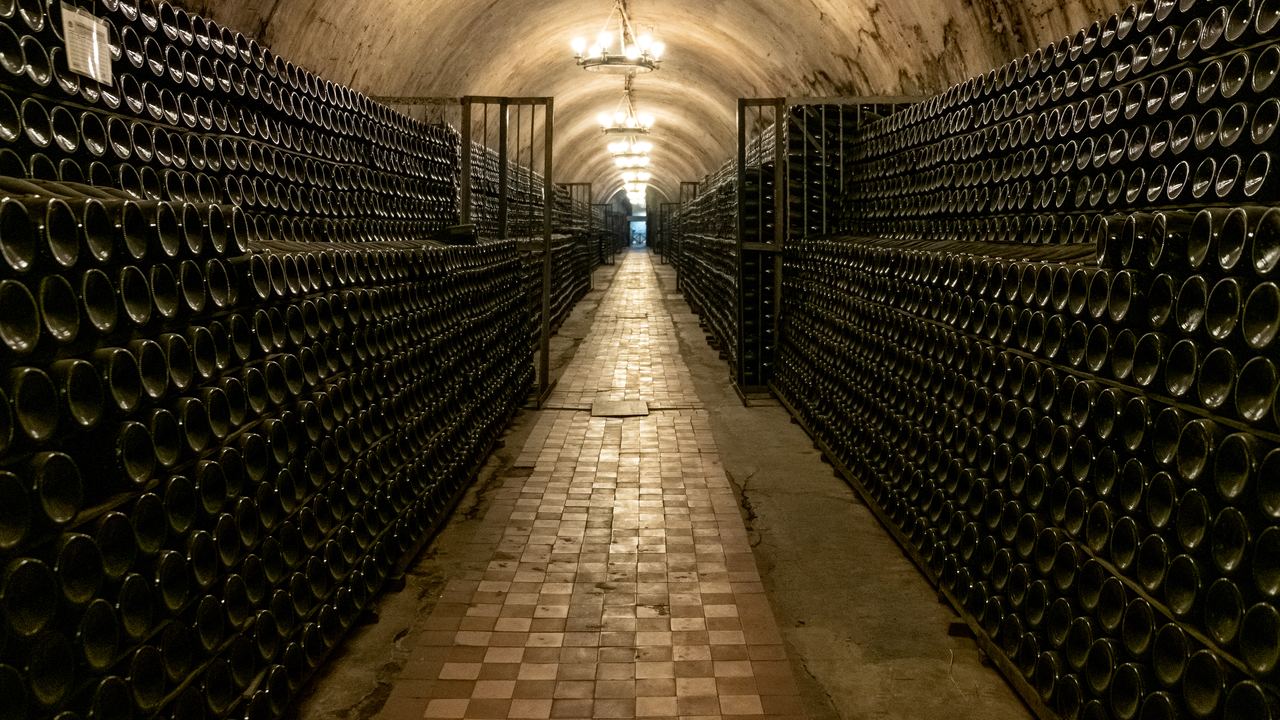
A listing that promises a visit to a cellar door in Hunter Valley and one that promises a visit to a bodega in Jerez are offering a winery visit under two local names. The words that cause trouble are the ones that look alike and are not: "reserve" is regulated in some countries and means nothing in others, and a wine with an appellation on the label can still tell you very little about how it was made.
This glossary covers the words you meet on a tour listing, at the tasting counter, on a label and in the cellar, in five tables. Every entry was checked against a regulator, a wine council or a national wine body, and each table has its sources underneath. Words we could not check at the source are left out, and the page says which. For how these words show up on a booking page, read how to read a wine tour listing.
Is "reserve" a legal term? It depends on the country
In the United States, the federal wine labeling rules do not define it. We downloaded the text of 27 CFR part 4 from the eCFR (version dated 2026-09-01) and searched it: the word "reserve" does not appear, although the same part does define estate bottled, vintage wine, varietal labeling and appellations of origin. The silence is selective, and it means a producer can print the word on any bottle. We looked at the federal rules only, not at state law.
In the denominations we opened, the word has a rulebook. Rioja's regulating council sets minimum ageing for Reserva. The Cava regulatory board sets one for Cava Reserva. Wines of Portugal lists Reserva as a designation for DOP wines that a certification body has to approve. The Chianti Classico consortium sets the ageing for its Riserva. Each denomination writes its own numbers, so a Rioja Reserva and a Chianti Classico Riserva are not the same thing.
On a Rioja bottle, "Reserva" tells you what the regulator required. On a bottle from a US winery, "Reserve" tells you what the winery chose to print.
Who made it and where: producers and places
| Term | Meaning in one sentence | Where you will meet it |
|---|---|---|
| Cellar door | The place where a winery receives visitors and sells its wines; New Zealand Winegrowers and Wine Australia both use the phrase for winery visits. | Tour titles in Australia and New Zealand, such as cellar door tours |
| Bodega | In Jerez the word names both the warehouses where sherry is aged and the companies that do the work. | Spain, especially sherry tours |
| Adega | Winery or cellar, in the Wines of Portugal glossary. | Portugal |
| Quinta / herdade | A wine estate or property; quinta is used mostly in the north of Portugal and herdade in the south. | Douro and other Portuguese wine tours |
| Single quinta | A vintage port from one harvest and from a single quinta, which the port institute glosses as a wine estate. | Port labels and Douro tastings |
| Domaine / cave particulière | An independent private winery, often open to the public, as the Rhone wine council describes it. | Rhone Valley and other French regions |
| Cooperative winery | One of three kinds of producer the Rhone wine council names, next to private wineries and wine merchants; the Champagne version is the CM row below. | France, including Champagne and the Rhone |
| Négociant / maison de négoce | The wine merchant, the third kind of producer the Rhone wine council names; the Champagne version is the NM row below. | France; appears on tour descriptions of big houses |
| Négociant manipulant (NM) | In Champagne, a company that buys grapes, must or wine and makes Champagne on its own premises. | Small print on Champagne labels |
| Récoltant manipulant (RM) | A Champagne grower who makes and sells own-label Champagne from grapes exclusively from his or her own vineyards. | Small print on Champagne labels |
| Coopérative de manipulation (CM) | A cooperative that markets Champagne made on its own premises from its members' grapes. | Small print on Champagne labels |
| Estate wine (South Africa) | One or more neighboring farms run as a unit with a production cellar on the unit; the term on a label confirms the wine was bottled and produced there from grapes grown on that unit. | South African labels |
| Single vineyard (South Africa) | The smallest production unit in the Wine of Origin scheme, which may not exceed six hectares. | South African labels |
Sources for this table: New Zealand Winegrowers, visitor page, Wine Australia, Sherry Wines regulatory council, bodegas, Wines of Portugal glossary, IVDP, port special categories, Inter Rhone glossary, Comité Champagne glossary and WOSA, Wine of Origin scheme. For places where these terms appear in practice, see Douro Valley and Champagne.
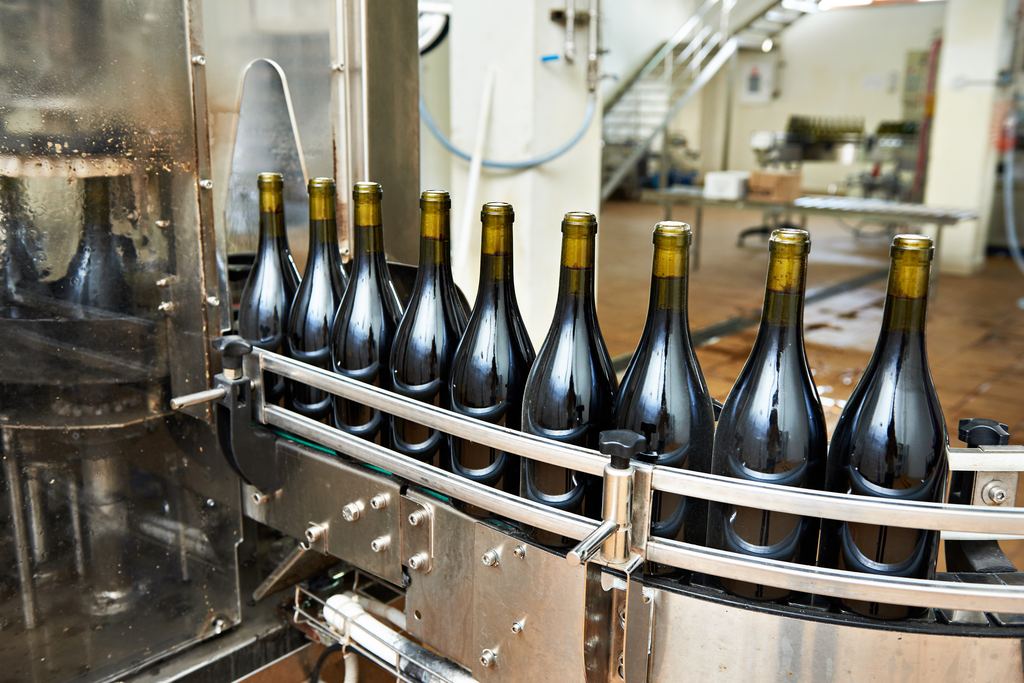
What the words at the tasting counter mean
| Term | Meaning in one sentence | Where you will meet it |
|---|---|---|
| Brut nature / pas dosé | A sparkling wine with less than 3 grams of sugar per litre and no sugar added; the Cava board gives the same 0 to 3 band. | Champagne, Cava, other sparkling wines |
| Extra brut | Between 0 and 6 grams of sugar per litre. | Sparkling labels |
| Brut | Less than 12 grams of sugar per litre: dry, but not bone dry. | Sparkling labels, tasting menus |
| Extra dry / extra seco | Between 12 and 17 grams per litre, which makes it sweeter than brut despite the name. | Sparkling labels |
| Sec / seco | Between 17 and 32 grams per litre. | Sparkling labels |
| Demi-sec / semi seco | Between 32 and 50 grams per litre. | Sparkling labels, dessert pairings |
| Doux / dulce | More than 50 grams per litre, the sweetest band. | Sparkling labels |
| Vintage (Champagne) | A cuvée made only from grapes of one year that the cellar master or grower judged worth highlighting. | Champagne labels and cellar visits |
| Cuvée | Either the first juice from the press or a precise blend of base wines; on a tasting menu it usually means the blend. | Champagne and other sparkling tastings |
| Assemblage | The blending of base wines with different characteristics, sometimes from several villages, grape varieties and years. | Champagne cellar visits |
| Reserve wines (Champagne) | Still wines set aside for years to add another dimension to a blend. | Champagne house tours |
| Blanc de blancs | Champagne made only from light-skinned grapes, usually Chardonnay. | Champagne labels |
| Blanc de noirs | Champagne made only from black-skinned grapes, Pinot Noir or Meunier. | Champagne labels |
| First nose, second nose | First nose is the initial smell; after swirling, the second nose reveals deeper and sometimes new aromas. | Guided tastings |
| Primary, secondary, tertiary aromas | Primary come from the grape variety, secondary from fermentation, tertiary from bottle maturation and ageing. | Tasting notes and guide talks |
| Aromatic persistence | How long the flavor lasts on the palate. | Tasting notes |
| Complexity | The diversity of aromas in the glass. | Tasting notes |
| Liveliness | The degree of acidity. | Tasting notes |
| Typicité | The hallmark of a wine that captures its style, origin and vintage; the Champagne council calls it a subjective notion. | Guide talks, French producers |
Sources for this table: the Comité Champagne glossary, which defines every Champagne term above including the sugar bands, and the Cava regulatory board pages on sweetness, which list the same bands for Cava. Other sparkling wines may use the same names, but we did not check them. Champagne dominates the table because its council publishes the most complete glossary we could open. More on what each region pours is in what to taste where.
What the origin line on a label tells you
| Term | Meaning in one sentence | Where you will meet it |
|---|---|---|
| AOC | France's national appellation, the step required before a name is registered as an EU AOP; only wines may still print "AOC". | French labels |
| PDO / AOP / DOP | The EU category with the strongest link to place: for wine, the grapes come exclusively from the area where the wine is made. | Labels across the EU |
| PGI / IGP | The EU category where at least 85 percent of the grapes come exclusively from the area where the wine is made. | Labels across the EU |
| IGP / vin de pays (France) | A broad geographical area with relatively flexible production rules, sitting between the simplest wines and the appellations. | French labels |
| VSIG (vin de table) | Wine without a geographical indication: the Rhone wine council says the old vins de table are now called VSIG, the bottom rung under the vins de pays and the appellations. | French labels |
| Vinho regional (Portugal) | The IGP category: no specific area and wider rules, often used by top wines that do not fit a DOP. | Portuguese labels |
| DOC / DOP (Portugal) | The highest official European category in the Wines of Portugal glossary, with rules per region on grapes and winemaking. | Portuguese labels |
| DOC and DOCG (Italy) | Italy's two traditional terms for PDO wines, set out in article 28 of law 238/2016; under article 33, a DOCG must have stricter vine-growing and winemaking rules than the DOC it comes from. | Italian labels, Chianti and Prosecco tours |
| IGT (Italy) | Italy's traditional term for IGP wines, short for indicazione geografica tipica; the law lets a label print it alone or next to IGP. | Italian labels |
| DO (Spain) | Denominación de Origen, one of Spain's traditional terms for PDO wines alongside DOCa, Vino de Pago and Vino de Calidad; Vino de la Tierra is the term for IGP wines, per the Ministry of Agriculture. | Spanish labels |
| DOCa (Spain) | Denominación de Origen Calificada, the Qualified Designation of Origin; the Rioja regulating council says Rioja received it in 1991 as the first in Spain, that it requires at least 10 years as a DO, and that only two meet the standards nationally. | Rioja labels |
| Cru | In Champagne it is a synonym for a wine village; in the Rhone it refers to communal appellations. | French labels and cellar talks |
| Climat (Burgundy) | A specific vineyard site, a named plot with its own microclimate and geology, that has a place in the hierarchy of crus; it has nothing to do with weather. | Burgundy labels and vineyard walks |
| Premier cru, grand cru (Champagne) | Former designations that some Champagne villages have kept. | Champagne labels |
| AVA | An American Viticultural Area: a delimited grape-growing region defined by TTB; at least 85 percent of the wine must come from grapes grown in it. | US labels, Napa and Sonoma tours |
| Varietal name (USA) | A grape name may be used as the type only if, in the general rule, at least 75 percent of the wine comes from it, and there is an appellation. | US labels |
| Estate bottled (USA) | Allowed only with a viticultural area appellation, and only if the winery grew the grapes on land it owns or controls there and made and bottled the wine on its premises. | US labels |
| VQA (Ontario) | Vintners Quality Alliance, the Ontario appellation system set in regulation under the Vintners Quality Alliance Act, 1999; every VQA wine must name where its grapes were grown, VQA Ontario means 100 percent Ontario grapes, and VQA Niagara Peninsula means more than 85 percent Niagara grapes. | Ontario labels and Niagara winery visits |
| VQA (British Columbia) | British Columbia Vintners Quality Alliance, created in 1990; Wines of BC says it certifies wine as 100 percent grown and made in the province and that an expert panel tastes every wine. | British Columbia labels, Okanagan tours |
| Wine of Origin (WO) | South Africa's scheme: the label confirms 100 percent of the grapes come from the named area. | South African labels |
| Ward, district, region, geographical unit | WO's ladder of areas: a ward is a small area with fairly homogeneous natural factors; a district is larger and less homogeneous. | South African labels |
| Geographical indication (GI) | In Australia, a defined boundary: only wine made from grapes grown inside it may use the name. | Australian labels and cellar door visits |
Sources: the INAO page on AOP and AOC (in French), the European Commission page on geographical indications, Inter Rhone, Wines of Portugal, the Association des Climats de Bourgogne, TTB on appellations of origin, 27 CFR part 4 on the eCFR, WOSA and Wine Australia on GIs. The Italian terms come from article 28 and article 33 of Italian law 238/2016 on Normattiva (in Italian), the Spanish ones from the Ministry of Agriculture's page on traditional wine terms (in Spanish) and the Rioja regulating council, and the Canadian ones from VQA Ontario on wine standards, its page on categories and labelling and Wines of BC. The appellation systems of Argentina, Chile and New Zealand are not in this table: we could not open an official source for them.
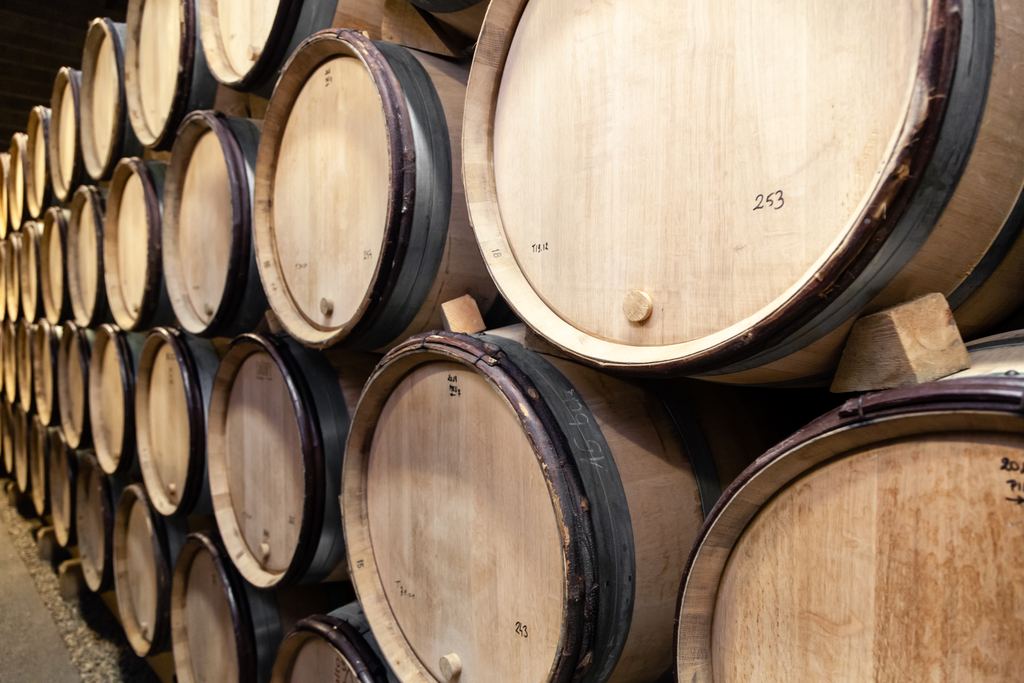
Ageing and quality words on the label
| Term | Meaning in one sentence | Where you will meet it |
|---|---|---|
| Crianza (Rioja) | For reds, a minimum of two years of ageing with at least one year in 225 litre oak barrels. | Rioja labels |
| Reserva (Rioja) | Reds aged at least three years between barrel and bottle, with at least one year in oak and six months in bottle. | Rioja labels |
| Gran Reserva (Rioja) | Reds from great harvests with at least five years of ageing: two in oak barrel and two in bottle. | Rioja labels |
| Viñedo singular, vino de zona (Rioja) | Two origin labels in Rioja: a geographical location tied to special terroirs, and a wine labeled by zone (Rioja Alta, Alavesa or Oriental). | Rioja labels |
| Cava de guarda, reserva, gran reserva | Cava categories defined by time in bottle: nine months for guarda, a minimum of 18 months for reserva, more than 30 months for gran reserva. | Cava labels and Penedes cellar visits |
| Cava de paraje calificado | A Cava category for wine from a specially selected place. | Cava labels |
| Reserva (Portugal) | A designation of superior quality for DOP wines that a certification body has to approve. | Portuguese labels |
| Grande reserva, garrafeira (Portugal) | Official designations for DOC, DOP and IGP wines, both with a harvest year; garrafeira also means a wine shop in Portuguese. | Portuguese labels |
| Selecção do enólogo | Winemaker's selection: the Wines of Portugal glossary calls it an unofficial designation. | Portuguese labels |
| Annata, riserva, gran selezione (Chianti Classico) | The three tiers of Chianti Classico: 12 months minimum ageing, 24 months, and 30 months from the estate's own grapes. | Chianti Classico labels |
| Ruby port | A young, fruity, powerful port that has been bottle matured, per the port institute. | Port cellar tastings |
| Tawny port | A port aged in wood; the style with an age statement such as 10 years is a little more developed than tawny reserve. | Port cellar tastings |
| Late bottled vintage (LBV) | A ruby port from a single year, bottled after four to six years in wood. | Port labels |
| Colheita port | A single-vintage tawny aged in cask for a minimum of seven years. | Port labels |
| Vintage port | The only port that ages in bottle, according to the port institute. | Port labels |
| Fino, oloroso, amontillado | Fino ages under a film of flor for at least two years; oloroso is fortified higher and ages exposed to oxygen; amontillado goes through both. | Sherry bodega tours |
| Reserve (USA) | No definition in the federal wine labeling rules we searched; it is the producer's word. | US labels, cellar door menus |
Sources: the Rioja regulating council, the Cava regulatory board, Wines of Portugal, the Chianti Classico consortium, IVDP on colour and sweetness and the sherry council on fino. Wines from these denominations are covered by region in Rioja and Chianti. Rules change, so check the regulator's page for the bottle in front of you.
How to read a wine label without a wine education
Start with the origin line. It says whether the wine comes from a legal area (an AOC, a PDO, an AVA, a Wine of Origin ward) or only from a brand name. Then find who made it: an estate that grew the grapes, a cooperative, or a merchant who bought them. The two are different businesses, and both make good wine.
Next, look at any ageing word and ask which rulebook stands behind it. Reserva in Rioja, Reserva in Portugal and "Reserve" on a US bottle are three different promises. Sweetness comes last on a sparkling wine: brut, extra dry, sec and demi-sec sit on a ladder, and extra dry is sweeter than brut. A vintage year means one harvest, and on a US label it needs an appellation beside it.
Some words have no owner. Tasting flight and vertical tasting are the working words of tasting rooms, but we could not find a regulator or a wine council that defines them, so they are not in the tables. Ask the venue how many wines and how many pours a flight means before you book. The same goes for chateau, cantina and tenuta: they are everyday words for a wine estate, but we could not open an official source that defines them, so they are left out. DOC and DOCG, by contrast, are defined in Italian law and are in the origin table above. Terms from Georgia's winemaking are in the qvevri guide.

Words you hear in the cellar
| Term | Meaning in one sentence | Where you will meet it |
|---|---|---|
| Terroir | A concept for an area where shared knowledge of how the environment and vineyard practice interact gives the wine distinctive characteristics; the OIV includes soil, topography, climate, landscape and biodiversity. | Every cellar talk |
| Solera and criaderas | Sherry's ageing system: casks arranged by age, with the tier of the oldest wine at floor level; the word comes from the Spanish for floor. | Jerez bodega tours |
| Flor | A film of yeast that protects a fino from oxidizing during ageing. | Jerez bodega tours |
| Fortification (mutage) | Alcohol added to stop fermentation; in port the wine is run into a tank and grape spirit is added. | Douro, Jerez and Rhone sweet wines |
| Lagar | A shallow fermentation vat of granite, marble, concrete or steel in which grapes are trodden by foot or mechanically. | Douro quintas and port visits |
| Qvevri | A clay vessel for making and storing wine in Georgia, which the National Wine Agency says gained UNESCO status for the method in 2013. | Kakheti winery visits |
| Crayère | An old chalk quarry used today as a cellar. | Reims and Epernay cellar tours |
| Liqueur de tirage | A solution of yeast, sugar and wine added to the blend to start the second fermentation in the bottle. | Sparkling wine tours |
| Prise de mousse | The change from still to sparkling wine during bottle fermentation, literally capturing the sparkle. | Sparkling wine tours |
| Lees, autolysis | Lees are the dead yeasts that settle as sediment; autolysis is the breakdown of the yeasts by their own enzymes after the second fermentation. | Sparkling wine tours |
| Remuage, pupitre | Riddling: rotating bottles on a wooden rack so the sediment slides to the neck; automated riddling is now the norm. | Champagne and Cava cellars |
| Disgorgement | The removal of the lees from the bottle neck, done by machine or by hand. | Sparkling wine tours |
| Dosage | After disgorgement, the bottle is topped up with a mix of cane sugar and wine; the amount sets the style. | Champagne cellar visits |
| Martinotti method | A second fermentation in large sealed tanks called autoclaves, the method the Prosecco consortium describes. | Prosecco tours |
Sources: OIV resolution on the definition of terroir, the sherry council on ageing, IVDP on port winemaking, Wines of Portugal, the Georgian National Wine Agency, Comité Champagne and the Prosecco DOC consortium. The OIV states its terroir definition is descriptive and separate from the legal definition of a geographical indication. More cellar facts are in wine facts worth checking.
Common questions about wine terms
Does "reserve" mean anything on a US wine label?
Not in the federal rules we searched. The text of 27 CFR part 4 does not contain the word, so it is the producer's choice. In Rioja, Cava, Portugal and Chianti Classico the equivalent word is tied to ageing rules. See the table above for each.
What does cellar door mean?
It is the place where a winery receives visitors and sells its wines. New Zealand Winegrowers and Wine Australia both use the phrase for winery visits.
Is extra dry sweeter than brut?
Yes. The Comité Champagne glossary puts brut under 12 grams of sugar per litre and extra dry between 12 and 17. The Cava board lists the same bands.
Are estate bottled and estate wine the same thing?
No. Estate bottled is a US label term with conditions in 27 CFR 4.26. Estate wine is a South African term in the Wine of Origin scheme, tied to a production unit with its own cellar.
Does a protected designation guarantee good wine?
It guarantees origin and rules, not taste. The European Commission describes PDO as grapes coming exclusively from the area where the wine is made. Nothing in that definition mentions quality.
Sources and method
We checked each term against the page that defines it, downloading the raw text and searching it rather than relying on summaries. Most terms were checked on 2026-09-30; the Italian, Spanish and Canadian terms were checked on 2026-10-01. Regulators and councils consulted:
- 27 CFR part 4, US wine labeling (eCFR) and TTB, appellations of origin
- European Commission, geographical indications and INAO
- Normattiva, Italian law 238/2016, article 28 and Spanish Ministry of Agriculture, traditional wine terms
- Comité Champagne glossary
- Rioja regulating council and Cava regulatory board
- Sherry Wines regulatory council
- IVDP, Douro and Porto wine institute and Wines of Portugal glossary
- Chianti Classico consortium and Prosecco DOC consortium
- Inter Rhone glossary and Association des Climats de Bourgogne
- WOSA, Wine Australia and New Zealand Winegrowers
- VQA Ontario and Wines of BC
- OIV resolution VITI 333/2010 and Georgia's National Wine Agency
What this page leaves out: the wine systems of Argentina, Chile, New Zealand and Greece, the rules of Canadian provinces other than Ontario and British Columbia, the words chateau, cantina and tenuta, and tasting room jargon that no regulator defines. Sugar bands and ageing minimums are the ones printed on the sources above and can be revised. Questions that these terms raise are also answered in our wine tour FAQ, and the whole section starts at Wine knowledge for travelers.
Data verified on. Terms checked against the regulator and council pages listed above; Italian, Spanish and Canadian terms on the date shown, the rest on 2026-09-30. The WOSA page was read as an archived copy.
Wine Tours Editorial earns a commission when you book through links on this page. It does not change the price you pay. See our editorial policy.
Use the words on a real tour
Start with a region whose labels you now know how to read.