
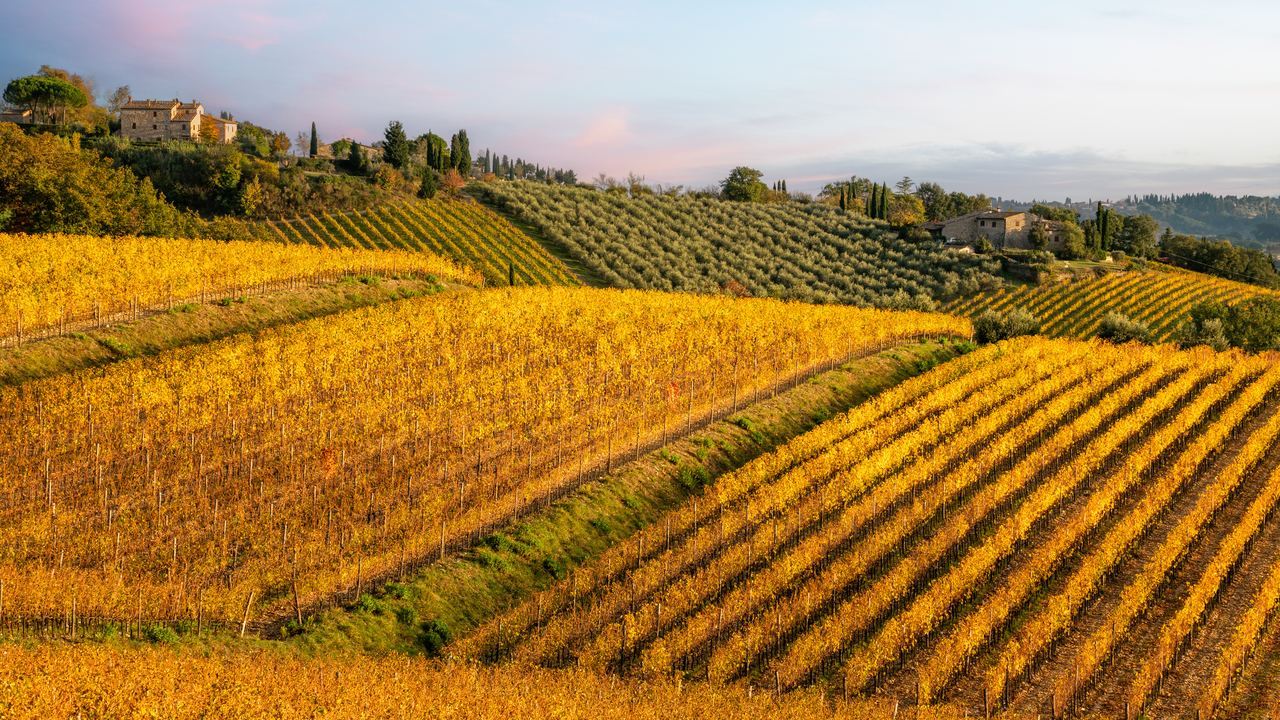
Book Chianti Classico first. It is the one wine zone in this comparison that lies between Florence and another city: the Chianti Classico consortium describes a territory whose capitals are Siena and Florence, shared between the two provinces, with 71,800 hectares inside it (Consorzio Vino Chianti Classico). The other three names in the table below, Montalcino, Montepulciano and San Gimignano, are trips of their own. We would give each a day.
Before the comparison, one trap. Chianti is a denomination, not a road. Two denominations carry the name, and a listing that says "Chianti" does not tell you which one you are visiting. The next section sorts them out. After that we compare the three choices on the axes that change a booking: the wine, the way you get there, the format, and the clock.
What is the difference between Chianti and Chianti Classico?
Chianti Classico is the zone marked by the Black Rooster, the Gallo Nero. Its consortium was founded in Radda in Chianti on 14 May 1924 and chose that emblem, and its history page dates the boundaries of the production area to 1716, when Grand Duke Cosimo III set them (Consorzio Vino Chianti Classico, history). Today the zone takes in the whole territories of Castellina in Chianti, Gaiole in Chianti, Greve in Chianti and Radda in Chianti, and parts of Barberino Tavarnelle, Castelnuovo Berardenga, Poggibonsi and San Casciano Val di Pesa (Consorzio Vino Chianti Classico).
The wider Chianti denomination is a different organization with a different map. The Consorzio Vino Chianti says its wine is made in six provinces, Florence, Siena, Arezzo, Pisa, Pistoia and Prato, and that seven sub-zones can appear on a label: Colli Aretini, Colli Fiorentini, Colli Senesi, Colline Pisane, Montalbano, Montespertoli and Rufina (Consorzio Vino Chianti). A sub-zone name is allowed only on wine made, aged and bottled inside that sub-zone (Consorzio Vino Chianti, identikit). Sangiovese is the base of both denominations, so the label, not the grape, tells them apart.
One rule shows that the wider denomination is not a looser version of the Classico. The Chianti consortium says that for some sub-zones the regulations make a pass through wood compulsory even for the annata wine, and it names Rufina and Colli Fiorentini as examples (Consorzio Vino Chianti, types). A Colli Fiorentini bottle follows its own rulebook.
Our rule for reading a listing: if it says "Chianti Classico" or names Greve, Panzano, Radda, Castellina or Gaiole, you are inside the zone with the Black Rooster. If it says only "Chianti", ask which denomination the cellars belong to.
Chianti Classico, wider Chianti or the rest of Tuscany: how do they compare?
Three choices, three questions: what you drink, how you reach it from Florence, and who it suits. The fourth row names the sources. The "who it suits" row is our judgment, not an official statement.
| Chianti Classico | Wider Chianti and Colli Fiorentini | Montalcino, Montepulciano and San Gimignano |
|---|---|---|
| Drink: Chianti Classico in its Annata, Riserva and Gran Selezione types, Sangiovese-based, under the Black Rooster emblem | Drink: Chianti, with one of seven sub-zone names on the label when the wine comes from it, for example Colli Fiorentini or Rufina | Drink: Brunello and Rosso di Montalcino; Vino Nobile and Rosso di Montepulciano, both Sangiovese; Vernaccia di San Gimignano, a white |
| From Florence: the zone lies between Florence and Siena. A bus line serves Greve, and Radda has a bus to Florence that does not run on Sundays or public holidays | From Florence: the denomination covers six provinces, Florence's among them. Which hills you visit depends on the sub-zone; Colli Fiorentini is the one named for Florence | From Florence: each is its own trip. Montalcino is forty kilometers south of Siena, and the Montepulciano and San Gimignano consortia both give addresses in the province of Siena |
| Who it suits: a first day from Florence, and anyone who wants to learn one wine well | Who it suits: a reader with a particular label in mind, or one who wants to choose by sub-zone | Who it suits: a second or third day, one place per day |
| Source: Consorzio Vino Chianti Classico; visitchianti.net | Source: Consorzio Vino Chianti | Source: the Brunello, Vino Nobile and Vernaccia consortia |

Is San Gimignano a wine day or a town day?
The wine is old. The Vernaccia consortium's history page cites a tax of three soldi on anyone selling a soma of Vernaccia outside the commune, dated 1276 (Consorzio Vernaccia di San Gimignano, history). It is also a white in a column of reds, and it can be made only from grapes grown inside the municipality of San Gimignano (Consorzio Vernaccia di San Gimignano, characteristics).
The towers in the photo are what most listings sell. We read a San Gimignano day as a town visit with a cellar stop, and the stop is what you ask about. Reading a tour listing explains what "tastings" can count.
Which wine do you want in the glass?
Sangiovese runs through every column, so the choice is about style and timing more than grape. The Brunello consortium says Brunello di Montalcino is made from Sangiovese, which is traditionally called Brunello there, and that it is released on 1 January of the fifth year after the harvest, after at least two years in wood and four months in bottle. Riserva spends at least six months in bottle and comes out a year later. Rosso di Montalcino, from the same grape, reaches the market on 1 September after the harvest year (Consorzio del Vino Brunello di Montalcino, wines). The practical result: one cellar is pouring a wine that took five years to reach the shelf, the next something far younger.
In Montepulciano the zone is the commune of Montepulciano, excluding the Valdichiana, with vineyards between 250 and 600 meters above sea level (Consorzio del Vino Nobile, production rules). The consortium says the Nobile became the first Italian wine to carry the DOCG neck strip, on 1 July 1980 (Consorzio del Vino Nobile di Montepulciano). For a white, San Gimignano is the only choice in this table.
Our view: pick the column first, then the cellar. A couple who want one wine done properly will learn more in two Chianti Classico cellars than in three regions in a day.

Can you do Chianti from Florence without a car?
Partly. The local tourism site for Chianti lists Autolinee Toscane bus line 365 for Greve in Chianti, line 125 for Castellina in Chianti run from the Greve side, and a bus between Radda and both Siena and Florence that does not run on Sundays or public holidays. The train stations it names sit at the edges of the zone: Barberino Val d'Elsa for Castellina and Barberino Tavarnelle, Castelnuovo Scalo for Castelnuovo Berardenga (about 7 km from the town), and Montevarchi for Radda (visitchianti.net). We read that as a bus day in Greve and wheels for the rest. We give no timetables, because the operator's page is the only current one.
For Montalcino, Montepulciano and San Gimignano we opened no official transport page, so we say nothing about buses there. A tour or a driver is how we would plan them.
Half day or full day: which Chianti tour from Florence?
Two listings can both say "from Florence" and still differ by hours of road, not by cellars. We found no official duration for these trips and give none. Read the door-to-door hours on the listing, not the tasting hours.
Our view: a half day fits one village and one cellar, and it is the right size when Chianti is one item in a Florence stay. A full day is for a second village, a lunch, and a cellar that is not on the main road. If you only have the half day, spend it inside the Classico zone and do not add a second region. A day of tasting shows what a full day looks like hour by hour.
Vespa, Fiat 500 or minibus?
In the listings we read, the vintage Vespa or Fiat 500 day is a Chianti specialty. We did not find it sold in other regions as a format of its own. The Vespa is about the road. The 500 is about two people and a host. A minibus is about the cellars.
Ask one thing before you book: who is at the controls. If you ride or drive, Italy's road code sets 0.5 grams per liter and a flat zero for drivers under 21, in their first three years of licence, and for professional drivers (Automobile Club d'Italia). Zero is the safest number on a scooter as in a car. Drink-driving limits covers the rest, and we would not taste while riding.
Private, group or your own car: what should a couple choose?
Read the pricing unit first. A private tour is often priced per vehicle and a group tour per person, so the comparison changes with the size of your party. What a wine tour costs works it through with invented round numbers. For two people, we would expect a private car to cost more per head than a seat in a small group, and to pay off only when you want to choose the cellars yourselves.
A rental car works when one of you will not touch a drop all day and you stay inside Chianti Classico, where the cellars are spread over four whole municipalities and several partial ones. Check the parking first: the local tourism site marks Greve's main square, Piazza Matteotti, as a ZTL in summer (visitchianti.net). We could not open a Comune di Firenze page on the zone in the center of Florence (the page we reached covered a park), so ask the rental desk where it starts before you drive out. Tour or rental car compares the options region by region.
Our rule for a couple leaving Florence: if both of you will taste, book a tour. If one of you will not drink at all, take the car, stay in Chianti Classico, and book the cellars ahead.
Is it worth asking for Colli Fiorentini?
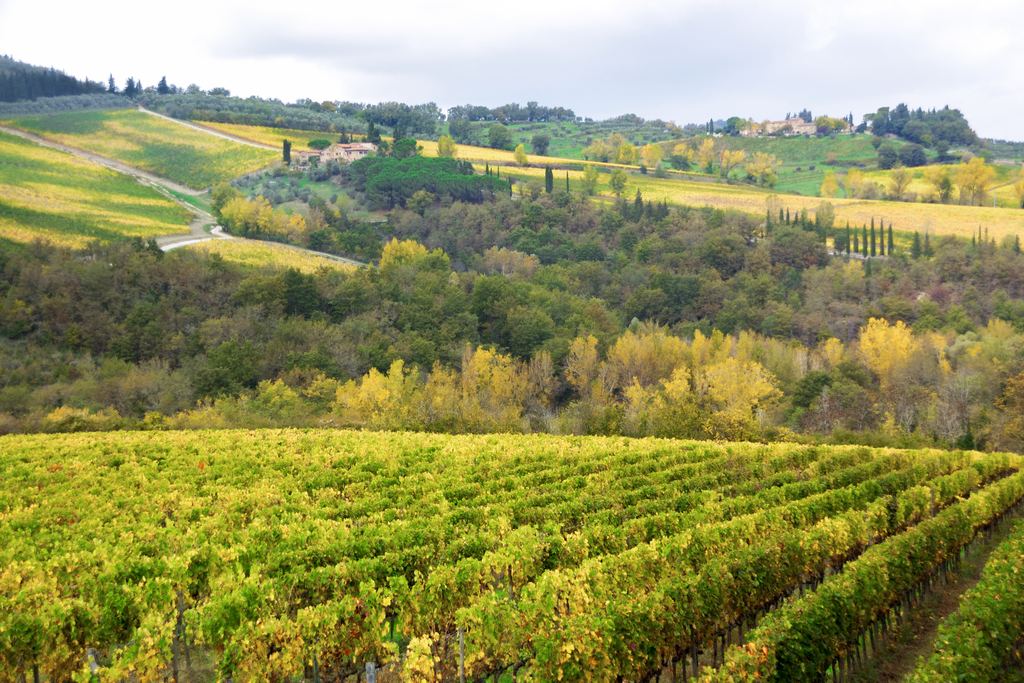
The name is on labels. In the tour titles we read it is rare: a listing says "Chianti", or names a village, and stops there. So if you want this sub-zone, treat it as a request. Ask the operator whether the cellars are inside the Colli Fiorentini sub-zone, since the label term is reserved for wine made, aged and bottled there. If you have no label in mind, skip the question. Chianti Classico is the easier one to get right.
What should you do with half a day, a full day or three days?
Half a day
Chianti Classico, nearest villages, one cellar you have booked. If nobody is driving and you prefer not to join a group, the bus to Greve in Chianti is the option the local tourism site lists. Check the operator for the day you travel.
A full day
Chianti Classico by tour, with a village lunch and two areas instead of one. The four municipalities that lie wholly inside the zone, Castellina, Gaiole, Greve and Radda, are the ones to look for on a listing. Do not add San Gimignano to the same day.
Three days
Day one: Chianti Classico, by tour, to learn the zone. Day two: Montalcino or Montepulciano, not both. Day three: San Gimignano for the white, or a Colli Fiorentini request if you fell for a label on day one. Book one guided day and decide how to do the others; a driver or a train can cover the rest, as how to choose a wine tour explains.
When in the year should you go?
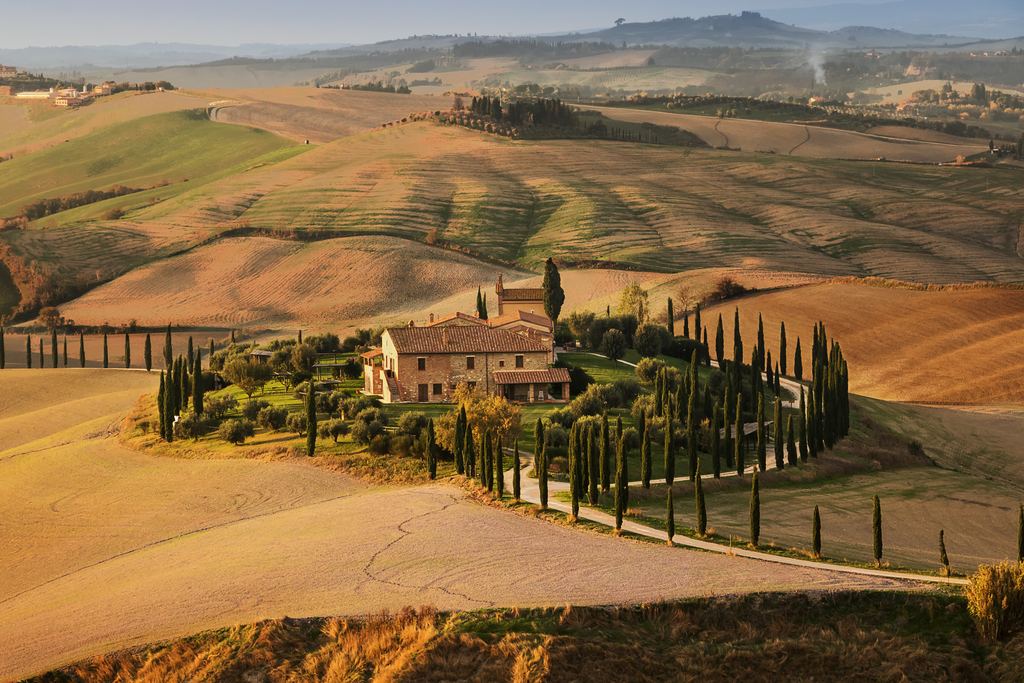
The Chianti Classico consortium gives a typical calendar for the vine: budding in the first or second ten days of April, flowering in the third ten days of May, veraison in the third ten days of August, ripening from the third ten days of September to the second ten days of October, and leaf fall in the second half of November (Consorzio Vino Chianti Classico, harvest). Autumn is when the cellars are working, which is not the same as when they are empty. Book earlier and expect less attention. The harvest page explains why.
The Chianti consortium describes the climate as continental, humid to sub-humid, with vineyards averaging between 200 and 400 meters above sea level, and its own description runs from November rain and fog to the raw cold of January and the heat of summer (Consorzio Vino Chianti). Bring layers for either end of the year.
Chianti from Florence: questions readers ask
Is Chianti Classico the same as Chianti?
No. They are two denominations with two consortia and two maps. Chianti Classico is the zone between Florence and Siena under the Black Rooster. Chianti covers six provinces and seven sub-zones. Sangiovese is the base of both.
Can I visit Chianti from Florence by bus?
Partly. The local tourism site lists bus line 365 for Greve in Chianti and a Radda bus to Florence that does not run on Sundays or public holidays. Check the operator's page, since we give no timetables.
Is a half-day Chianti tour enough?
In our view it fits one village and one cellar. We have no official duration for these trips, so read the door-to-door hours on the listing. See reading a tour listing.
Can I do Montalcino from Florence in a day?
The Brunello consortium puts Montalcino forty kilometers south of Siena. We have no official journey time and would give it a day of its own, not paired with Chianti Classico.
Is a Vespa wine tour safe?
Zero is the safest number. Ask who rides, and do not taste if you are at the controls. Italy sets a flat zero for drivers under 21, new drivers and professionals. See drink-driving limits.
Where to go next
The destination pages list the tours for each area.
Sources and method
We opened each page below on 2026-09-30 and wrote only what it says. Denominations, municipalities, sub-zones and ageing rules come from the consortia. The advice on formats and the "who it suits" row are our judgment. We give no prices and no timetables. We could not confirm an official journey time from Florence to any of these places, and we could not open a Comune di Firenze page on the central traffic zone, so neither appears here. For the wider regional choice, return to Choose your wine region.
- Consorzio Vino Chianti Classico: production zone
- Consorzio Vino Chianti Classico: history
- Consorzio Vino Chianti Classico: types
- Consorzio Vino Chianti Classico: harvest and vine calendar
- Consorzio Vino Chianti: the wine lands
- Consorzio Vino Chianti: identikit
- Consorzio Vino Chianti: types of Chianti
- Consorzio del Vino Brunello di Montalcino: territory
- Consorzio del Vino Brunello di Montalcino: wines
- Consorzio del Vino Nobile di Montepulciano: production rules
- Consorzio del Vino Nobile di Montepulciano: the wine
- Consorzio Vernaccia di San Gimignano: characteristics
- Consorzio Vernaccia di San Gimignano: history
- visitchianti.net: services and transport
- Automobile Club d'Italia: alcohol and driving
Data verified on. Denominations and geography checked against the linked consortium pages on this date. Format advice is our judgment. Editorial Policy
Wine Tours Editorial earns a commission when you book through links on this page. It does not change the price you pay. See our editorial policy.
Choose the Chianti day from Florence
Compare half-day, full-day, private and Vespa or Fiat 500 tours on the Chianti page.