
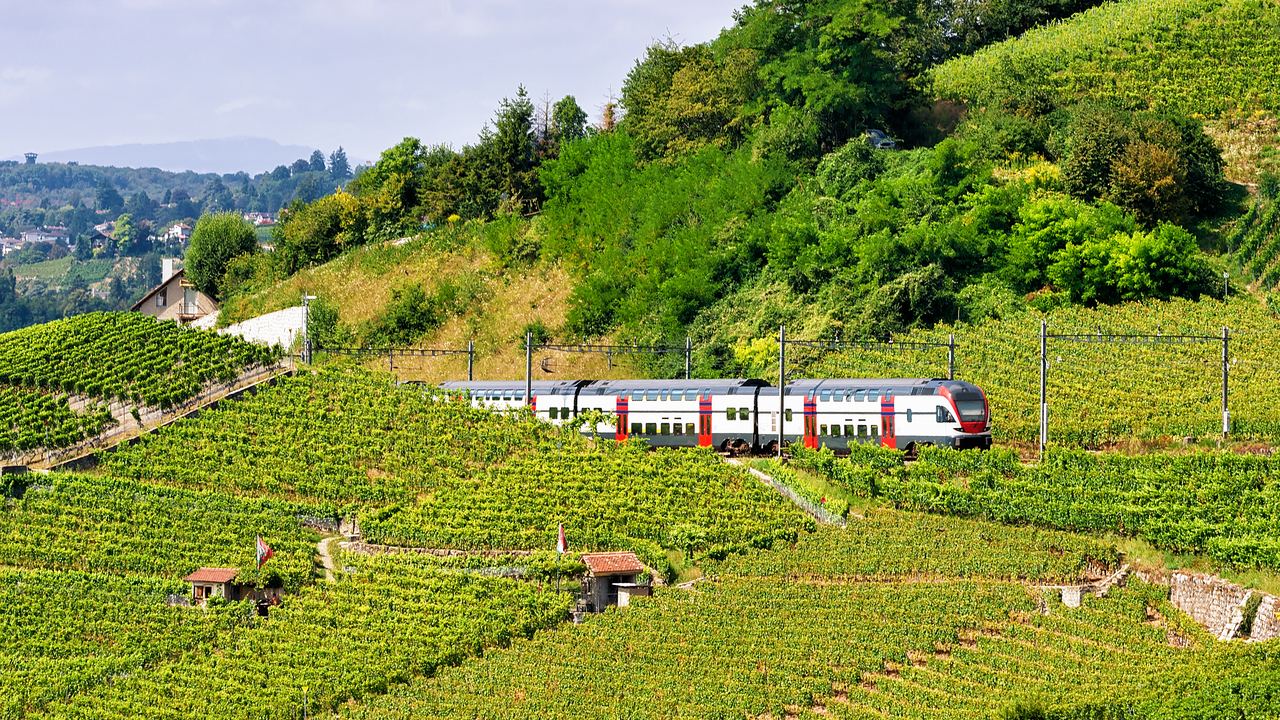
Rent a car only if the person at the wheel will drink nothing all day and your cellars are too far apart for a bus or a train to reach. In every other case the car is the harder way to do a wine day. In some places it is worse than harder: the town center can be closed to traffic, the road can keep to the left, and the legal limit can sit lower than you expect.
Wine tour or rental car is less a question about money than about two facts: who will still be sober at 5 p.m., and how far the cellars are from the nearest station or bus stop. Below we go through what exists without a car in five regions, using the pages of tourist offices and railways that we opened on 2026-09-30, and then through the cases where the car beats every tour. We sell tours. Where the car wins, we say so.
Wine tour or rental car: which one fits your trip?
This is our judgment, built on the regional facts further down. Use it to decide where to start looking, then let the local details overrule us.
| Your situation | Lean toward | Why |
|---|---|---|
| Everyone in the group wants to taste | Tour, private driver or train | Nobody is left to drive, and a designated driver has to drink nothing |
| One person will not drink at all and you have named cellars | Rental car | You set the order and the pace; a sober driver is the main thing a tour would sell you |
| You sleep in a compact town with cellars close by | Neither: walk, bike or train | Saint-Emilion and Epernay both have a station and a small center |
| Cellars are strung along one road with no rail line | Tour or private driver | Napa's tourism board describes five towns spread over about 30 miles |
| The town center is a limited traffic zone | Car only if you park outside it | Greve in Chianti lists its main square as a ZTL in summer |
| First day behind the wheel on the left side of the road | Tour | Left-hand traffic and clockwise roundabouts are a lot to learn on a day when others taste |
Row two is the honest exception on a site that lists tours. A sober driver with two or three booked cellars in the same valley does not need a minibus, a schedule set by strangers, or a guide. A tour pays for itself when you cannot or should not drive, not when you simply do not want to read a map.
Can you visit wineries without a car in Chianti, Champagne, Saint-Emilion and Napa?
Yes in all four, with limits that differ a lot. The table lists only what the official or local tourism pages say exists. We give no timetables and no fares, because both change and both are on the operator's own page.
| Region | Without a car | Where it stops | Source |
|---|---|---|---|
| Chianti (Greve) | Autolinee Toscane bus line 365 from Florence; paid and free parking in town | Piazza Matteotti, the main square, is a ZTL in summer | visitchianti.net |
| Champagne | Epernay has a station; a TER runs between Reims and Epernay with four stops in between | Epernay is 28 km from Reims; Hautvillers, 6 km from Epernay, is not a stop on the line | Epernay tourist office |
| Saint-Emilion | TER from Bordeaux via Libourne; a regional bus, line 304 | The station is 1.5 km from the center, uphill; the year-round bus stops at Libourne, 7 km away | Saint-Emilion tourist office |
| Napa | Ferry to Vallejo plus Vine Transit bus; a paved bike trail from Napa to Yountville; a rail dining train | Vine buses do not reach rural wineries; the valley runs about 30 miles across five towns | Visit Napa Valley; napavalley.com |
| Douro | Douro line, Porto to Pocinho, more than 170 km | It is a seat on a train: a cellar visit is a separate arrangement | CP Comboios de Portugal |
| Franschhoek | Hop-on hop-off wine tram on five lines | Runs to a set schedule; its own guide suggests three or four estates a day | Franschhoek Wine Tram |
Pages behind the table:
Chianti: what the bus and the parking signs say
The local tourism site visitchianti.net lists the bus to Greve in Chianti under buses from Florence, run by Autolinee Toscane as line 365. For drivers it names paid parking at Piazza della Resistenza and Piazzale Ferrante Mori, free parking on Viale Rosa Libri and Via Danimarca, paid parking at Montefioralle and free parking at Panzano in Chianti. It also marks Piazza Matteotti, the main square of Greve, as a ZTL in summer (visitchianti.net).
That is the pattern to expect across Tuscany: the square you came to see is the one you cannot drive into. We could not open the page of the Comune di Firenze that sets out the Florence zone, so check it before you pick up a car in the city. For the wider choice of bus, Vespa or guided day, see Chianti from Florence.
Champagne: two stations, 28 kilometers apart
The Epernay tourist office describes a TER called la Ligne des bulles between Reims and Epernay, with four stops in between: Rilly-la-Montagne, Germaine, Avenay-Val-d'Or and Aÿ-Champagne. It lists Paris-Est to Epernay as a rail journey of 1h20, puts the town 28 km from Reims and 140 km from Paris, and says Hautvillers is 6 km away (Epernay tourist office). The high-speed station at Reims-Bezannes is 25 km from Epernay, so check which station your ticket ends at.
Short answer: Epernay works without a car, Hautvillers needs a taxi or a bike, and a day that touches both Reims and Epernay is a lot of train for one day. Reims or Epernay compares the two bases.
Saint-Emilion: the station is a walk uphill
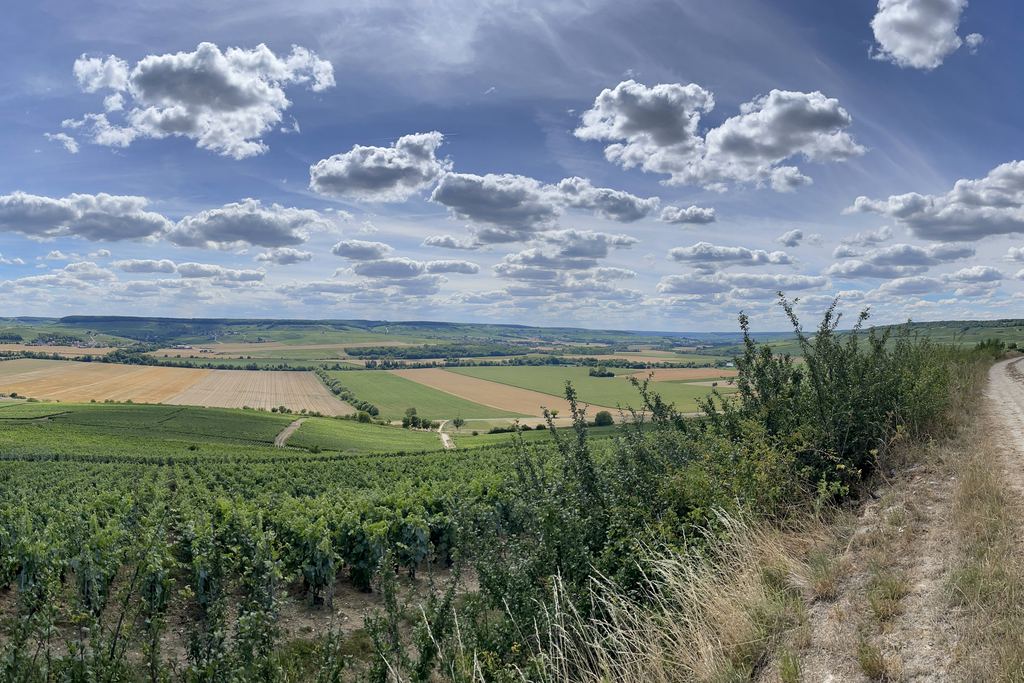
The village tourist office says the SNCF runs regular trains between Bordeaux, Libourne and Saint-Emilion, and that the regional bus company serves the same towns, including line 304. In high season that bus stops a 100-meter walk from the center. The rest of the year it stops at Libourne, 7 km away, and the office suggests a taxi for the last stretch (Saint-Emilion tourist office).
The detail that changes a plan is the walk from the station. The same page calls it about twenty minutes, warns that the access road has pavements on only part of the way and that the path to the village slopes, and gives the station car park as 1.5 km from the center, about 25 minutes on foot. It lists a tuk-tuk shuttle, a shared electric scooter and a taxi as the other ways up. We would walk it on arrival, in daylight, and book the taxi for the way back. The village and its surrounding jurisdiction have been on the UNESCO World Heritage list since 1999, as the office notes, which is why the UNESCO page includes it.
Napa: a valley that assumes you have a car
Visit Napa Valley says the valley spans five towns over about 30 miles. Its first-timer guide tells visitors not to wine and drive: a tasting pour is not a full glass, it says, but across five wines and three tasting rooms you can feel the effects sooner than you expect, so arrange transportation ahead of time, from rideshare and taxis to shuttles and limousines (Visit Napa Valley).
A January 2026 guide on napavalley.com is blunter about the car-free options. It says the San Francisco Bay Ferry to Vallejo, then a Vine Transit bus to downtown Napa, can take two to three hours. It says Vine buses run hourly by day and do not reach rural wineries, that rideshare coverage is inconsistent north of St. Helena or after dark, and that the wine train is a fixed route with tastings and dining, not a hop-on hop-off service between wineries. It recommends a paved trail for cycling between Napa and Yountville (napavalley.com). That site is produced by a local tourism marketer, so read it as the valley describing itself. The picture still holds: if you want five cellars spread across towns, hire a tour or a driver. See Napa and Sonoma for the two valleys.

What does the Douro train add to a wine day?
The Douro line was built partly to move wine. CP Comboios de Portugal says construction began in 1875 at Ermesinde to carry people and goods, particularly wine, and that the railway reached Régua four years later. Today it runs from Porto to Pocinho, more than 170 kilometers, and much of the route follows the river (CP Comboios de Portugal).
What it adds is a seat with a view and no driver to worry about. What it does not add is a cellar door: nothing on the operator's page sells a tasting, so getting from a station to a cellar is still your problem or a booking. Read the Douro Valley page before you choose.
In Franschhoek the tram solves that last-stretch problem with its own stops. The Franschhoek Wine Tram's guide says it runs five lines, each serving different estates, that you need not stop at every estate on a line, and that it recommends three to four estates in a day. It also says the trams run to a set schedule, so you watch the clock instead of the glass (Franschhoek Wine Tram). Stellenbosch or Franschhoek weighs the two bases.
Where is driving yourself a bad idea?
Three places show up again and again: towns with restricted centers, countries that drive on the left, and any day where the driver will taste.
Left-hand traffic. Tourism Australia says the most important thing to know is that Australians drive on the left, that roundabouts run clockwise and you give way to the right, and that manual drivers change gear with the left hand. It suggests an automatic hire car if you are not used to it. It also says you can drive on a foreign licence for up to three months if it is in English, and that otherwise you need an International Driving Permit (Tourism Australia). Licence rules are set by each state, so confirm with the transport authority where you will drive. We did not open an official page for South Africa or New Zealand on this point, so we say nothing about them here.
The legal limit. New South Wales has three limits: zero, under 0.02 and under 0.05. Learner, provisional 1 and provisional 2 drivers are at zero, and so are visitors holding an overseas learner or provisional licence. The general limit of under 0.05 applies to all other licences, visitor licences included. The state transport agency adds that it recommends not drinking at all if you plan to drive (Transport for NSW). In Italy, the Automobile Club d'Italia gives 0.5 grams per liter as the limit and an absolute ban on any alcohol for drivers under 21, newly licensed drivers and professional drivers (ACI). In France, a probationary licence carries a threshold of 0.2 grams per liter of blood (service-public.gouv.fr). Limits change and this is not legal advice: check the official source for the place where you will drive. Drink-driving limits collects the rest.
Our rule: zero is the safest number. If you rent a car for wine country, the person who drives does not taste, and that person is decided before the first booking, not at the third cellar.

When does a rental car beat a tour?
Four cases, and in each of them a day tour costs you more than it returns.
The first is the sober driver with booked cellars, described above. The second is the region the official pages themselves admit is built for cars: in Napa, the Vine buses do not reach rural wineries and the valley is 30 miles long. A guided day solves that, but so does a car with a driver who is not tasting. The third is the small appointment-only winery. If you have already chosen it and it can only take you at 11 a.m., a group itinerary that reaches it at 2 p.m. is the wrong tool.
The fourth is the day you change base. Driving from Bordeaux to Saint-Emilion with a suitcase, or from Florence into the hills, is a fine use of a car. Driving the same roads again after a long lunch is not. Pick up the car for the transfer and leave it parked for the tasting.
How do you decide in five minutes?
- Count who will taste. If it is everyone, drop the car.
- If someone will not drink at all, ask whether they want to drive all day. If yes, a car is viable.
- Look up the town on its tourist office page. If it has a station and a compact center, try the train first.
- Check for a restricted zone or left-hand traffic. Either one pushes you toward a tour or driver.
- If you are still unsure, book one guided day and keep the rest flexible. How to choose a wine tour covers that choice, and a day of tasting shows what the day looks like.
Tour or rental car: questions readers ask
Is it cheaper to rent a car or take a wine tour?
We give no prices, because they change and depend on the day and the group. The useful comparison is the unit: a tour is usually priced per person and a private driver per vehicle, while a car adds fuel, parking and insurance. What a wine tour costs builds the comparison with invented round numbers.
Can I visit Champagne without a car?
Yes for Epernay. The tourist office lists a station there and a TER to Reims with four stops in between, and lists Paris-Est to Epernay as a rail journey. Hautvillers is not one of those stops, so expect a taxi or a bike for it.
Can I do Saint-Emilion from Bordeaux by train?
Yes. The village tourist office says regular trains run between Bordeaux, Libourne and Saint-Emilion. The station sits about 1.5 km from the center along a sloping road with pavements on only part of the way, so plan for the walk or a taxi.
Is it safe to drive if I only taste a little?
Zero is the safest number, and in some places the legal limit for certain drivers is already zero. If you will drive, the driver should not drink. If nobody wants to drive, book a tour, a train or a driver.
Should I rent a car in Napa?
Only with a sober driver. Visit Napa Valley describes five towns over about 30 miles and advises arranging transportation in advance. napavalley.com says the local buses do not reach rural wineries. See Napa and Sonoma.
How we checked these facts
We opened each page below on 2026-09-30 and wrote only what it says. The tables that recommend a transport and the closing rule are our judgment, and we say so where they appear. We could not open the Comune di Firenze page on the Florence zone, and we did not open an official page on left-hand traffic or drink-driving for South Africa or New Zealand. We give no prices and no timetables.
- visitchianti.net: services and transport
- Epernay tourist office: getting to the Champagne region
- Saint-Emilion tourist office: access and parking
- Visit Napa Valley: first-timer's guide
- napavalley.com: Napa Valley without a car
- CP Comboios de Portugal: the Douro line
- Franschhoek Wine Tram: a beginner's guide
- Tourism Australia: driving in Australia
- Transport for NSW: alcohol and driving
- ACI: alcohol and driving
- service-public.gouv.fr: alcohol limits for drivers
Data verified on. Facts checked against the linked pages on this date. Transport recommendations are our judgment. Editorial Policy
Wine Tours Editorial earns a commission when you book through links on this page. It does not change the price you pay. See our editorial policy.
Leave the driving to someone else
Open the Champagne page to compare tours from Reims, Epernay and Paris.