

In Champagne the grapes are picked entirely by hand. The Comité Champagne gives the reason: to make white wine partly from black grapes, the bunches must be picked carefully and reach the press fast, so the juice does not take colour from the skins (Comité Champagne, harvesting). The rule is local. The logic is not. Most of what separates a white, a red, a rosé, a sparkling and a fortified wine is decided in the first days after picking, and a winery visit puts you next to each decision.
This page follows a visit in the order you would walk it: vineyard, harvest, press, tank, barrel, bottle. It is a map for travelers, not a course for winemakers, so it stops where the cellar tour stops. The details come from the Comité Champagne, the Douro and Port wine institute (IVDP), the sherry regulating council, the Rioja regulating council and the Australian Wine Research Institute (AWRI), all opened on 2026-10-01. For the words you will hear along the way, keep the wine tour glossary open in another tab.
What does the vineyard tell you before the harvest?
The calendar of the vine, month by month and by hemisphere, is on our harvest-season page, so we will not repeat it. What matters for the cellar is that the picking date is a decision, and it changes with the wine. In Champagne it is set when acidity and ripeness are predicted to balance, and a network of volunteer growers called MATU watches 600 control plots to make that call (Comité Champagne).
The IVDP shows the same choice in the Douro. Red port comes from riper grapes, with more sugar, tannin and colour compounds. For white port the growers look for more aromatic compounds and acidity, and white grapes are, as a rule, picked earlier than red (IVDP, port winemaking). The institute puts the start of the Douro harvest between the end of August and mid-October. If your guide points at a row and says when it will be picked, ask what style it is for.
What happens at harvest and sorting?
Hand picking and machine picking change what arrives at the winery. The AWRI notes that machine-harvested fruit gets some skin contact on the way to the cellar, and that when machine harvesting was introduced this was regarded as largely negative for wine quality. Picking at cooler night temperatures, better dosing of sulfur dioxide and gentler handling have largely cancelled the early problems (AWRI, skin contact). In Champagne the question does not come up, because hand picking is the rule, and the Comité and the INAO set the authorized yield each year inside the European Union's maximum.

Sorting is the step we cannot describe with a source. We did not find an institutional page we could open that explains sorting tables, so we say nothing about how they work. What you can do is ask: are the grapes sorted, by hand or by machine, and before or after destemming?
What do the press and the crusher show you?
This is where white and red part ways. For a white, the juice is separated from the skins early. The AWRI describes the choice a winemaker has with whole bunches: crush and press as fast as possible, or crush and leave a period of skin contact first, which adds flavor and body but needs tight control because over-extraction can hurt the wine. It adds that traditional Champagne presses result in virtual avoidance of skin contact (AWRI, skin contact). A red does the opposite: the skins go into the fermenter with the juice.
Champagne is the best-documented press you can visit. The whole clusters are pressed gently and separately by grape variety and by growth. The first pressing is the cuvée and the second the taille. Champagne presses hold from 2,000 kg to 12,000 kg of grapes, and the cages are emptied and rinsed after each 4,000 kg unit called a marc. Until the late 1980s the presses were entirely manual. They still make up 18 percent of those in use, and the rest are mechanical (Comité Champagne, pressing).
If a guide says the process is all done by hand, ask which step. In Champagne the harvest is by rule. The press and, as we read below, the riddling are mostly machines.
What does fermentation look like in steel, cement, wood and clay?
Fermentation is yeast eating the grape sugar and making alcohol. The Comité Champagne says primary fermentation can take place in oak but usually happens in stainless steel vats, kept apart by growth, press fraction, grape variety and year (Comité Champagne, fermentation). The AWRI adds the history of temperature: white wine fermentations began to be controlled by refrigeration in the 1950s, which allowed cooler, slower ferments and fresh, aromatic white styles (AWRI, amber wine). That is why a modern white cellar is built around tanks that can be cooled.
A red ferment looks different because the skins rise and form a cap. The AWRI says fermentation temperature and cap management strongly affect how much color and tannin are extracted, and that pumping over, rack-and-return and plunging are the usual ways of working the cap (AWRI, fermentation temperature). Some red makers add whole bunches, stems included. The AWRI says the technique is most common with Pinot Noir and Shiraz, rarely used with Cabernet Sauvignon because stems can give a cut-grass note, and that the best results come from stems that have turned woody (AWRI, whole bunch).
Port is its own scene. The IVDP describes two ways: the traditional one, with grapes trodden in large stone tanks called lagares, and the modern one in wineries with electric crushers, robotic treading tanks, stainless steel tanks and automatic presses. After the fermentation, wine rests in cement or stainless steel tanks until the end of winter (IVDP). The institute lists treading as one of two methods, not the only one, so ask whether the stone tanks you are shown are in daily use.

Clay is the other end of the spectrum. The AWRI defines amber, or orange, wine as white grapes made the way reds are, fermented on skins and sometimes stems, and notes that producers use barrels, tanks and different kinds of amphorae. It calls amber winemaking a regional specialty in places such as Georgia, Friuli and Sicily (AWRI, amber wine). The Georgian version, with buried qvevri, has its own page.
Why is rosé pink, and is it a blend of red and white?
Sometimes, but not always. The Comité Champagne names two ways to make a rosé from black grapes. In the macerated method, destemmed grapes sit in a tank for 24 to 72 hours before pressing, depending on the year, and release their pigment into the juice. In saignée, 10 to 15 percent of the juice is bled off from grapes left to macerate for a red wine, after 24 to 72 hours (Comité Champagne, glossary). The AWRI says the drained juice is often made into a rosé and that the bleeding concentrates the red wine left behind (AWRI, saignée).
Champagne also allows the blend: red Champagne wine is added to base white wines, around 5 to 20 percent, before bottling (Comité Champagne). That is a Champagne practice, and we did not check whether other regions permit it. So when a guide says rosé is red and white mixed, the honest answer is that it is one route among three, and you should ask which one the bottle in your glass followed.
What is the ageing room for: barrels, bottles and cold cellars?
Ageing is the part of the visit with the most atmosphere and the least that you can judge by eye. Four examples show four different jobs for a cellar. The first is lees. The AWRI says leaving a wine in contact with its fermentation lees, the dead yeast, is a traditional method in many parts of Europe and is most associated with Burgundian Chardonnay and Muscadet. It adds texture and complexity, and it is most commonly done in small oak barrels. The French name is sur lie, and stirring the lees is called batonnage (AWRI, lees contact).
In Rioja the barrel is written into the rules. The regulating council says a Crianza red has at least two years of ageing with at least one year in a 225 litre oak barrel, and that for whites and rosés the minimum barrel time is six months (Rioja regulating council). On a Rioja visit, then, a wall of barrels is also a rulebook. More on that in our Rioja page.
In Jerez the building does part of the work. The sherry council says a bodega's walls are at least 60 centimeters thick, the roof can reach about 15 meters at the central arch, and the floor is albero earth that is sprinkled with water to hold humidity. The wine sits in 600 litre American oak butts that are not filled to the top: about 500 litres goes in, leaving a space of "two fists" of air for the flor to grow. Because the wood breathes, 3 to 5 percent of the wine is lost each year to evaporation, which concentrates what is left (Sherry Wines regulating council, ageing).
The sherry council also defines the solera: casks arranged in tiers, with the oldest wine on the floor tier. The word comes from the Spanish for floor. Wine is drawn from the solera tier for bottling and topped up from the tier above, which is called a criadera. The council says sherry must age at least two years. The tiers are the thing to ask to see.
How is sparkling wine made by the traditional method?
Sparkling wine by the traditional method makes its bubbles inside the bottle you will drink from. The Comité Champagne describes the sequence. After blending, the wine is bottled with a liqueur de tirage, a mix of still wine, sugar and yeast. Bottling cannot happen before 1 January after the harvest, and the wine cannot be moved to another container: it is sold in the bottle in which it fermented a second time. The yeast eats the sugar and makes alcohol and bubbles (Comité Champagne, bottling and second fermentation).
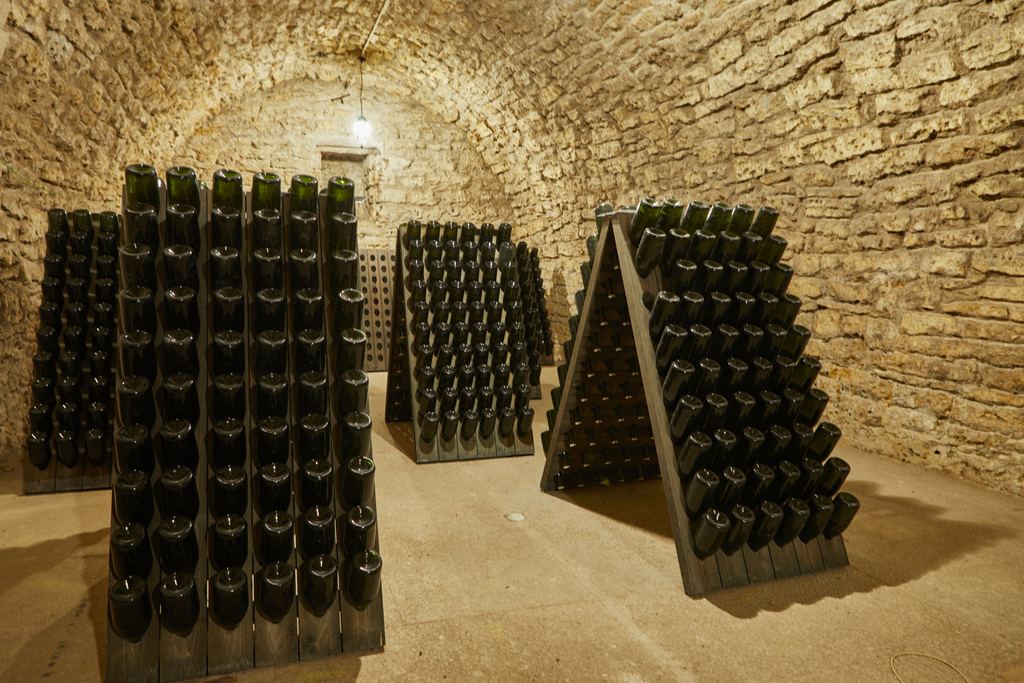
Then the bottles lie in the cellar, in the dark, at a steady temperature of around 12 degrees Celsius. The statutory minimum is 15 months on the lees before release, and three years for vintage cuvées. The Comité says in practice it is nearly always longer: 2 to 3 years for non-vintage and 4 to 10 for vintage (Comité Champagne, maturation). The cold, dark cellar you walk through is where most of that time passes.
Riddling and disgorgement are the visible show. Riddling moves the sediment to the neck. By hand, on wooden racks called pupitres, it takes 4 to 6 weeks and about 25 turns per bottle, and one riddler can handle about 40,000 bottles a day. Automated machines take racks of 500 bottles and finish in about a week. The Comité says riddling is usually automated these days (Comité Champagne, riddling). Disgorgement plunges the bottle neck into a solution at about minus 27 degrees Celsius to freeze the sediment into a plug, which the pressure inside the bottle pushes out. Large bottles and a few special cuvées are still disgorged by hand (Comité Champagne, disgorgement).
Last comes dosage: cane sugar dissolved in wine, about 1 cl for a 75 cl bottle of brut. The Comité's bands are under 12 grams of sugar per litre for brut, less than 3 for brut nature, and above 50 for doux (Comité Champagne, dosage). Champagne is the case we could open, so these rules are Champagne's. Other sparkling wines have their own, and the Champagne page covers the region where this method has its home.
What is different about port and sherry, the fortified wines?
Fortified means alcohol is added. In port the sequence matters. During fermentation the wine is drawn off from the skins and run into a tank beside the lagar, where grape spirit is added to stop the fermentation. The most common proportion is one part spirit to four parts of must-wine, which leaves some residual sugar and a final strength between 19 and 22 percent by volume (IVDP). The institute adds that the winemaker decides how sweet a port will be by choosing when to interrupt fermentation (IVDP, colour and sweetness). In spring the wines are classified and blended, and the winemaker decides whether to age them in the Douro or in the lodges at Vila Nova de Gaia.
Sherry ages in two ways in the same region. The council describes biological ageing, under a film of yeast called flor that protects the wine from air, and oxidative ageing, in contact with oxygen, where the wine gets darker and more concentrated. It says the system of criaderas and solera is the only viable way to age biologically, and that flor ageing and the solera system are exceptional in winemaking worldwide (Sherry Wines regulating council). Port visits are in the Douro Valley.
What does bottling look like on a winery visit?
It may not look like much, and we cannot say if the line will be on your visit. The AWRI calls packaging a key step with a major impact on the condition of the wine when it reaches the consumer, and its page covers closures, filtration, bottling line sanitation, and storage and transport of the finished wine (AWRI, storage and packaging). In Champagne, the wine is corked with a cork held by a wire cage called a muselet, and the Comité says the stopper lets in a little air, which is why the wine keeps changing over the years (Comité Champagne, corking).
What will you see for each type of wine?
| Type | Skins and juice | What you can see | Source |
|---|---|---|---|
| White (still) | Juice pressed away from the skins, with skin contact a winemaker's choice | Presses, temperature-controlled tanks, sometimes barrels with lees | AWRI |
| Red | Skins stay in the ferment and the cap is worked by pumping over or plunging | Fermenters with a cap of skins, pumps, sometimes whole bunches | AWRI |
| Rosé | Brief skin contact, bled-off juice, or in Champagne a blend with red wine | Tanks, depending on the method the producer uses | Comité Champagne, AWRI |
| Amber or orange | White grapes fermented on skins, sometimes on stems | Open or closed fermenters, barrels, amphorae or qvevri | AWRI |
| Sparkling, traditional method | Gently pressed whole clusters, second fermentation in the bottle | Bottles on lees in a cold cellar, riddling racks, disgorgement, dosage | Comité Champagne |
| Port | Grapes trodden or crushed, spirit added mid-fermentation | Lagares, stainless or cement tanks, lodges at Vila Nova de Gaia | IVDP |
| Sherry | Aged under flor or oxidatively, in tiered casks | Tall bodegas, American oak butts, soleras and criaderas | Sherry council |
The first three rows are the ones you will meet on most tours. The others are specialties of a region, and the table says nothing about wines that need a different cellar, such as Prosecco made in tanks, because we did not open a source for them. Where the same word means a different practice by country, what to taste where sorts it by region.
What are the six questions to ask at a winery?
- Were the grapes picked by hand, and sorted? Hand or machine picking changes how much skin contact the juice gets before it reaches the press (AWRI). Sorting is a step we could not source, so this question is worth asking for its own sake.
- Is this white pressed straight away or left on its skins, and is this red made with whole bunches? Both are choices the AWRI describes, and each changes texture and tannin.
- What was it fermented and aged in, and for how long? "Oak" alone says little. Rioja writes the barrel size and the months into the rules (Rioja council), and a Georgian white can stay on its skins for months.
- When was fermentation stopped, or how much sugar was added? In port the answer decides sweetness (IVDP). In Champagne it is the dosage.
- Is this a finished, bottled wine, or a sample from tank or barrel? It is our view, not a source, that a sample from a barrel is a work in progress, and the guide can tell you which one is in your glass.
- Do you make this from your own grapes? Our glossary, which cites the Comité Champagne, separates a grower who makes own-label Champagne from a cooperative and from a house that buys grapes. Those are three different businesses, and the question tells you which one you are visiting.
One more thing about the tasting that ends the visit: if you are driving, zero is the safest number, and our drink-driving page has the official limits we could verify. A day of tasting walks through how a full day adds up. The questions readers send most often about all of this will be in the wine tour FAQ.
How wine is made: short answers
What is the main difference between white and red wine production?
Skins. For a white, the juice is separated from the skins early, and skin contact is a choice. For a red, the skins stay in the ferment, which is where the color and tannin come from (AWRI, skin contact and fermentation temperature).
How long does Champagne age before it is sold?
The statutory minimum is 15 months on the lees, and three years for vintage cuvées. The Comité Champagne says in practice it is nearly always longer: 2 to 3 years for non-vintage and 4 to 10 for vintage.
Is port made the same way as sherry?
No. Port has spirit added during fermentation to stop it, which leaves sugar and a strength between 19 and 22 percent (IVDP). Sherry ages at least two years in tiered casks, under flor or in contact with air (sherry council).
Is rosé a mix of red and white wine?
Not always. The Comité Champagne names a short maceration of black grapes and the bleeding of juice (saignée) as two ways. Blending in red wine is a third, which it describes for Champagne.
Do all wines age in oak barrels?
No. The Comité Champagne says primary fermentation usually happens in stainless steel vats, and the IVDP says port rests in cement or stainless steel tanks until the end of winter. Rioja, by contrast, writes minimum barrel time into its rules for some categories (Rioja regulating council).
Keep reading in this section
Four pages that go deeper on the words, the regions, the facts and one ancient method.
Wine tour glossary
Terms on tour listings, labels and tasting menus, checked against regulators.
What to taste where
Grapes and styles by wine region, with the body that governs each name.
Wine facts worth checking
Verified facts and the popular legends that are not true.
Georgian qvevri wine
Buried clay vessels, amber whites and what a Kakheti cellar shows you.
Where these facts come from
We read each page below as raw text on 2026-10-01 and searched it for the figures used here instead of relying on summaries. Sources:
- Comité Champagne, how Champagne is made, with its pages on harvesting, pressing, fermentation, bottling, maturation, riddling, disgorgement and dosage, and its glossary
- IVDP, port winemaking and colour and sweetness
- Sherry Wines regulating council, ageing
- Rioja regulating council, classification
- AWRI: skin contact, fermentation temperature, whole bunch, amber wine, saignée, lees contact and storage and packaging
What this page leaves out: the UC Davis viticulture and enology site refused our automated request (403), so it is not used. We found no source for sorting tables, and for still-wine bottling we describe only what the AWRI page says. Numbers here are Champagne's, the Douro's, Jerez's and Rioja's, and other regions have their own rules.
Data verified on. Figures checked on the institution pages above on this date. Editorial Policy
Wine Tours Editorial earns a commission when you book through links on this page. It does not change the price you pay. See our editorial policy.
See the cellars in Champagne
Riddling racks, chalk cellars and a press: open the Champagne page to see what the tours cover.